Versatile
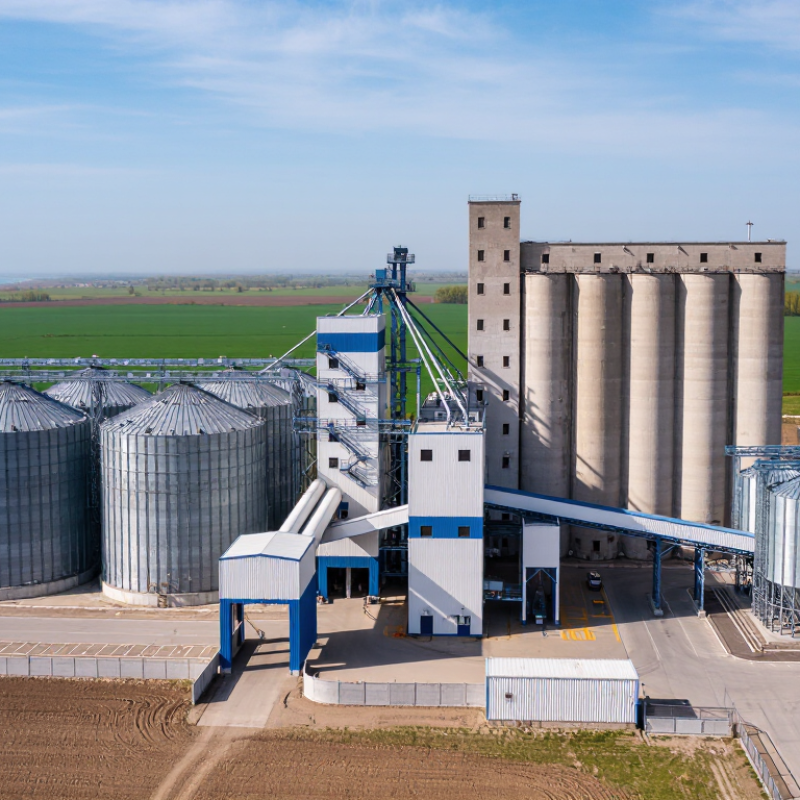
Corrugated Galvanized Steel Silo | General-purpose storage at farms, collection points, grain elevators, and commercial handling terminals. | Wheat, maize, barley, sorghum, rice, sunflower seed, and other free-flowing dry grains. Suitable for commodities requiring regular aeration and unloading. | Works in temperate, hot, and moderately humid regions when fitted with aeration, roof ventilation, temperature monitoring, and moisture-management systems. | Small farms through large commercial facilities; commonly selected for modular expansion. | Approximately 50–15,000 tonnes per silo, depending on diameter, wall height, and engineering design. | Modular construction, relatively fast installation, broad size range, good cleanability, and straightforward integration with conveyors and aeration floors. | Requires corrosion protection, foundation engineering, careful control of condensation, and inspection of bolts, sealants, roof vents, and stiffeners. Not automatically suitable for high-moisture grain. | Structural and load design may reference EN 1991-4 and EN 1993-4-1, or equivalent national standards. Check local requirements for wind, seismic loads, foundation design, grain dust, electrical equipment, and fire safety. |
High-throughput
Hopper-Bottom Steel Silo | Frequent batch discharge, temporary holding, seed handling, blending, and facilities where rapid unloading is important. | Clean, dry wheat, maize, barley, rice, pulses, and selected oilseeds. Particularly useful where product segregation or quick turnover matters. | Suitable for most climates, provided the cone, supports, and foundation are designed for local wind, snow, seismic, and temperature conditions. | Farms, feed mills, seed plants, grain processors, and medium-sized commercial sites. | Approximately 20–5,000 tonnes per silo; larger units require substantial support structures and foundations. | Fast gravity discharge, reduced residual grain compared with flat-bottom designs, easier product changeover, and lower dependence on floor conveyors for unloading. | Higher structural and foundation cost per tonne, limited suitability for very large long-term storage, and greater sensitivity to cone wear, flow problems, and eccentric discharge loads. | Use silo structural design standards such as EN 1993-4-1 or equivalent, together with applicable concrete, steel, seismic, machinery guarding, dust-explosion, and electrical-area requirements. |
Large-volume
Flat-Bottom Steel Silo | Long-term reserve storage and high-volume inventory at grain elevators, cooperatives, ports, and processing complexes. | Wheat, maize, barley, rice, sorghum, and other dry, free-flowing grains with predictable flow characteristics. | Effective in temperate and hot climates with correctly sized aeration, roof ventilation, moisture control, and regular temperature monitoring. | Medium to very large commercial storage operations. | Approximately 500–25,000 tonnes per silo; project-specific capacities can be higher with detailed engineering. | Low storage cost per tonne at large capacities, efficient use of site area, strong compatibility with continuous conveying systems, and good suitability for reserve stocks. | Requires a dedicated unloading system such as sweep augers or reclaim conveyors. Residual grain removal, aeration uniformity, floor loading, and confined-space safety require careful planning. | Typical references include EN 1991-4, EN 1993-4-1, ACI 313 where applicable, and local foundation, seismic, fire, dust, and occupational-safety regulations. |
Durable
Reinforced-Concrete Silo | Permanent high-capacity storage, integrated elevator complexes, port terminals, and sites requiring long service life and high fire resistance. | Wheat, maize, rice, barley, oilseeds, and other dry bulk products. Appropriate where multiple cells, segregation, and high throughput are required. | Suitable for hot, cold, humid, coastal, and high-wind regions when concrete durability, waterproofing, thermal movement, and foundation conditions are engineered correctly. | Large commercial, industrial, port, and strategic-reserve facilities. | Approximately 2,000–50,000 tonnes per silo group, depending on cell arrangement and project design. | High durability, substantial fire resistance, good resistance to external weathering, efficient multi-cell layouts, and suitability for tall structures and heavy-duty handling. | High initial capital cost, longer construction period, difficult modification after construction, and strict requirements for concrete quality, joints, waterproofing, curing, and crack control. | Concrete design may reference ACI 313, EN 1992, EN 1991-4, or equivalent national standards. Also verify seismic design, fire protection, concrete durability, occupational safety, and dust-explosion controls. |
Small-scale
Farm Grain Bin | On-farm storage after harvest, short- to medium-term holding, and reducing dependence on immediate harvest-season sales. | Mainly wheat, maize, barley, oats, sorghum, and other dry grains. Oilseeds may require stricter temperature and aeration management. | Suitable for most agricultural regions if the bin has adequate roof ventilation, aeration capacity, weather sealing, and protection from groundwater and flooding. | Individual farms, small cooperatives, and local collection sites. | Approximately 20–2,000 tonnes per bin. | Relatively simple operation, scalable farm investment, rapid loading, and practical integration with portable or fixed aeration equipment. | Limited automation and handling throughput. Buyers must verify local foundation conditions, safe access, ladder and roof systems, aeration sizing, and procedures for entry and grain entrapment prevention. | Confirm compliance with local agricultural-building, structural-steel, electrical, machine-guarding, confined-space, and grain-dust safety requirements. |
Specialized
Flat-Store or Warehouse with Aerated Floor | Flexible storage for large batches, irregular-shaped products, bagged commodities, and facilities requiring easy access for cleaning or multiple product types. | Maize, wheat, rice, barley, pulses, oilseeds, and products that may not flow reliably through a conventional silo. | Suitable for humid or variable climates when the building envelope, roof insulation, ventilation, drainage, and aerated floor are designed to control moisture migration. | Farms, cooperatives, humanitarian reserves, feed facilities, and medium-to-large warehouses. | Approximately 500–20,000 tonnes per building, subject to floor area, wall height, and product bulk density. | High flexibility, easy visual inspection, simple segregation with internal partitions, suitability for non-free-flowing products, and convenient access for cleaning. | Larger footprint than a tall silo, greater exposure to handling losses, more demanding pest control, and potential for uneven aeration or grain heating if the pile is poorly managed. | Verify building, floor-load, fire, ventilation, electrical, dust, pest-control, and occupational-safety requirements. Aeration and grain-temperature monitoring should be designed for the stored commodity. |
Temporary
Grain Storage Bag | Seasonal overflow capacity, emergency storage, remote collection points, and temporary inventory when permanent construction is not yet available. | Dry maize, wheat, barley, soybeans, and similar commodities when moisture content and loading conditions are carefully controlled. | Best on well-drained, level ground in regions where ultraviolet exposure, flooding, rodents, sharp stones, and prolonged extreme heat can be controlled. | Farms, seasonal aggregators, relief operations, and temporary commercial storage. | Approximately 100–300 tonnes per bag, with total site capacity determined by the number of bags and available handling space. | Low fixed infrastructure requirement, rapid deployment, flexible site capacity, and useful as overflow during peak harvest periods. | Not a substitute for permanent aerated storage. Requires suitable filling and unloading machinery, strict moisture control, frequent inspection, and protection from puncture, pests, flooding, and excessive heat. | Check local regulations for temporary structures, food safety, agricultural storage, machinery safety, worker access, environmental protection, and disposal or recycling of used plastic. |
High-moisture
Sealed or Oxygen-Limited Silo | Controlled storage of high-moisture grain for livestock feed, wet grain preservation, and applications where fermentation or oxygen limitation is intentional. | High-moisture maize and selected feed grains. Generally not the first choice for grain intended for conventional dry-milling or long-distance export. | Can operate in varied climates, but sealing quality, drainage, temperature control, and protection from solar heating are critical. | Livestock farms, feed operations, and specialized feed-storage facilities. | Approximately 50–2,000 tonnes per silo or storage unit. | Can preserve high-moisture feed grain without conventional drying and may reduce immediate energy demand for drying when the end use permits it. | Product quality depends on moisture level, oxygen exclusion, filling speed, compaction, sealing, and withdrawal rate. Unsuitable management can cause spoilage, mycotoxin risk, or difficult unloading. | Verify local feed-safety, food-safety, structural, pressure or vacuum protection, worker-safety, and environmental requirements. The process must be designed specifically for the intended moisture and end use. |