What are the Benefits of Bag Palletizing Robots for Efficiency?
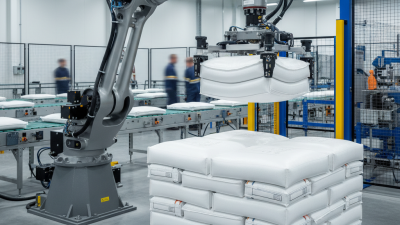
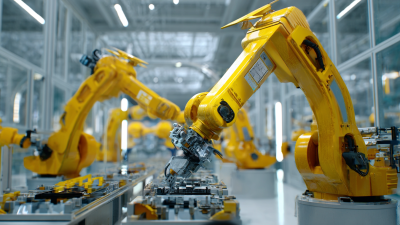
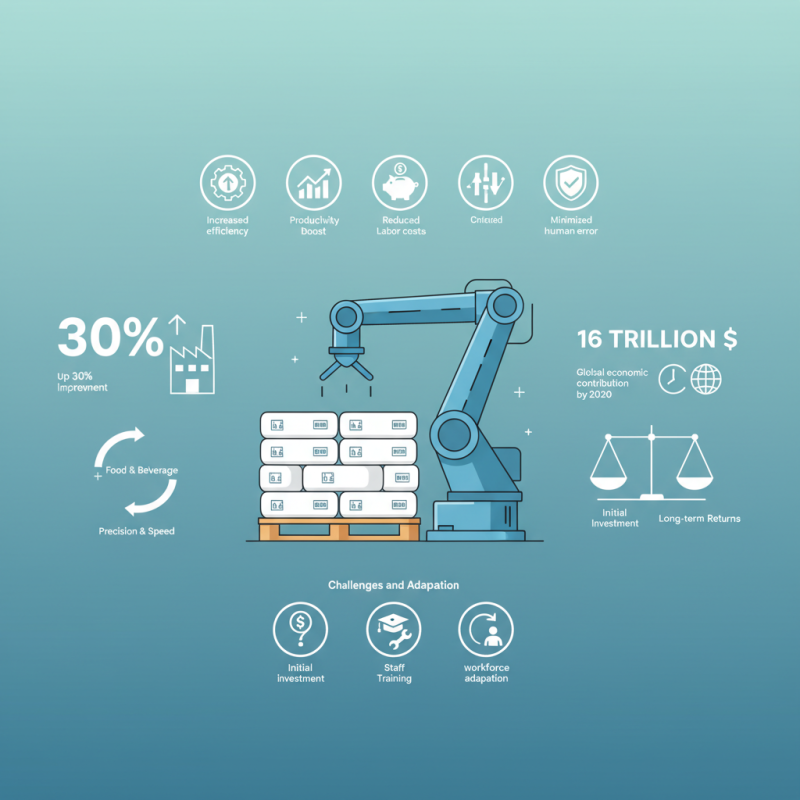
As industries strive for greater efficiency, bag palletizing robots have emerged as a pivotal solution. These advanced systems enhance productivity by automating the stacking of bags. According to a report by the International Federation of Robotics, automation can improve operational efficiency by up to 30%. This increase is vital in sectors such as food and beverage, where precision and speed are essential.
Bag palletizing robots reduce labor costs and minimize human error. They can operate continuously, significantly boosting throughput. In addition, the World Economic Forum notes that automation technology could contribute $16 trillion to the global economy by 2030. Yet, the transition to robotic systems is not without challenges. Companies must consider initial investments and training requirements for staff. Adequate planning is crucial to maximize the benefits of these robots.
Investing in bag palletizing robots offers substantial returns. Companies can optimize their processes while addressing workforce shortages. However, as organizations embrace this technology, it is essential to remain vigilant about its implications on the workforce and maintain a balanced approach to automation. The journey towards efficiency is ongoing, and adaptations are part of the process.
Advantages of Bag Palletizing Robots in Modern Warehousing
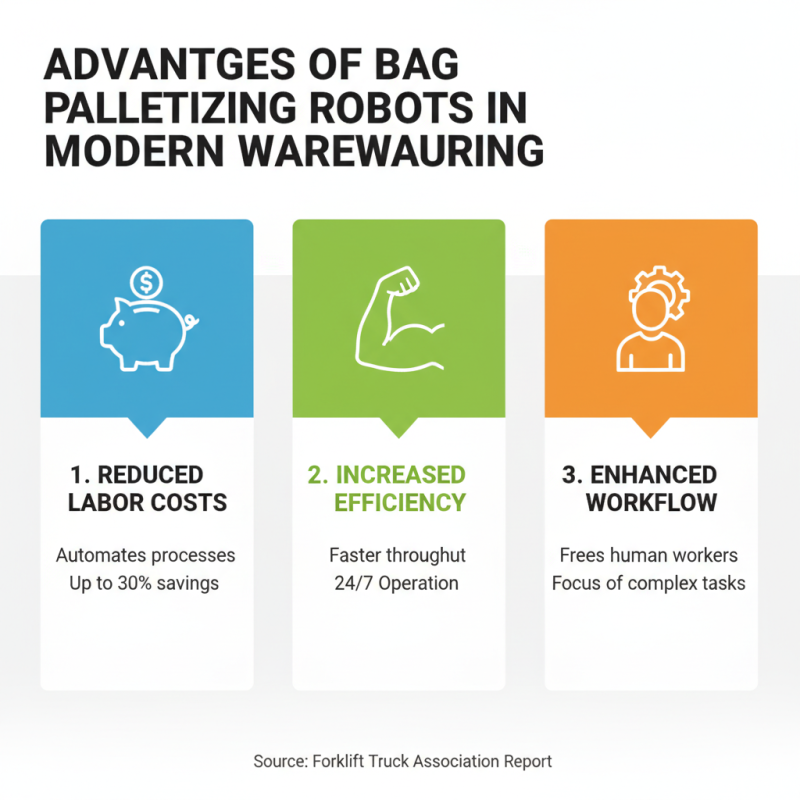
In modern warehousing, bag palletizing robots offer significant advantages that enhance efficiency. One major benefit is the reduction in labor costs. According to a report by the Forklift Truck Association, automating palletizing processes can cut labor expenses by up to 30%. This reduction not only saves money but also allows human workers to focus on more complex tasks.
In addition to cost savings, these robots improve accuracy and speed in operations. Studies by the Association for Advancing Automation suggest that robotic palletizers can work at speeds exceeding 1,200 bags per hour. Human workers, in contrast, may struggle to maintain such efficiency over extended periods. Additionally, the precision of robotic systems minimizes the risk of damage to bags, which often leads to waste reduction. Of course, transitioning to automation presents challenges. Implementing new technology requires investment and training. Some facilities may find the upfront costs daunting. It is essential to weigh these factors carefully.
Moreover, not every warehouse might need full automation. Factors such as bag types, volume, and layout play significant roles. A thorough analysis should precede the decision to adopt robotic palletizing. Balancing efficiency and practical needs is key to successful integration.
Enhancing Productivity: Speed and Efficiency in Operations
In today's fast-paced logistics environment, bag palletizing robots are revolutionizing operations. These advanced systems can dramatically enhance productivity by automating the often tedious task of bag stacking. This not only increases speed but also improves the overall efficiency of the supply chain. Factories are now reporting significant reductions in labor costs and quicker turnaround times due to this technology.
Implementing bag palletizing robots also frees human workers from strenuous manual labor. This shift allows them to focus on higher-value tasks, such as quality control and inventory management. However, it is crucial to recognize that automation is not a one-size-fits-all solution. Some operations may face challenges in integrating these robots into existing processes or require adjustment periods for staff. Continuous training and adaptation are key to maximizing the benefits these robots can offer.
Efficiency is not solely about speed. It is also about minimizing errors and maintaining safety in the workplace. While robotic systems can optimize operations, unforeseen glitches may still occur. Regular maintenance and monitoring are essential to avoid production delays. Embracing technology should come with a willingness to adapt and iterate.
What are the Benefits of Bag Palletizing Robots for Efficiency? - Enhancing Productivity: Speed and Efficiency in Operations
| Benefit |
Description |
Impact on Productivity |
Percentage Improvement (%) |
| Increased Speed |
Robots can operate continuously without breaks, significantly increasing throughput. |
Higher production rates and reduced cycle time. |
30% |
| Consistency |
Robots provide uniformity in the palletizing process, reducing human error. |
More reliable output and quality assurance. |
20% |
| Labor Efficiency |
Freed up human resources for more complex tasks, enhancing overall labor efficiency. |
Reduced labor costs and better allocation of staff. |
25% |
| Space Optimization |
Compact robot designs help optimize floor space usage in warehouses. |
Maximized storage and operational efficiency. |
15% |
| Safety |
Reduced workplace injuries by minimizing manual handling of heavy loads. |
Safer working environment leading to lower insurance costs. |
10% |
Reducing Labor Costs Through Automation of Bag Handling
Bag palletizing robots are transforming the logistics landscape by automating bag handling tasks. By implementing these robots, businesses can significantly reduce labor costs. Manual bag handling is labor-intensive and often prone to errors. Automation streamlines the process, enhancing efficiency and reliability.
Labor costs can escalate quickly in industries that rely heavily on manual labor. A significant portion of operational budgets is often allocated to workforce expenses. Bag palletizing robots minimize this need. They work tirelessly and consistently, ensuring that tasks are completed swiftly. This not only leads to cost savings but also increases productivity.
While the benefits are clear, companies must consider the initial investment in robotic technology. The transition requires careful planning and training. Integrating robots can present challenges. Organizations must evaluate their specific needs and processes. Adapting to automation may lead to a learning curve for employees. However, the long-term advantages often outweigh these challenges.
Improving Accuracy and Consistency in Palletizing Processes
Bag palletizing robots are transforming efficiency in manufacturing and logistics. One key benefit is improved accuracy in stacking products. These robots use advanced sensors and software to ensure precise placement. They can adapt to various bag sizes and shapes, which reduces the risk of damage during handling. Consistency in stacking is another advantage. Unlike human workers, robots maintain the same speed and precision throughout their shifts. This consistency leads to higher throughput in palletizing processes.
Moreover, the integration of these robots minimizes human error. Humans can become fatigued or distracted, leading to mistakes. Robots, however, operate systematically, ensuring each bag is placed correctly every time. This not only enhances product integrity but also boosts overall productivity. Companies often report a decrease in waste and rework thanks to the reliability of robotic palletizing systems.
However, the transition to robotic systems can present challenges. Training staff to work alongside robots may require time and resources. Additionally, the initial investment in technology may be substantial. It's essential for companies to weigh the long-term benefits against these challenges. A thoughtful approach is necessary to implement such changes successfully.
Minimizing Workplace Injuries and Ergonomic Risks for Workers
Bag palletizing robots are revolutionizing the way goods are stacked in warehouses. They help in minimizing workplace injuries and ergonomic risks for workers. Manual palletizing often involves repetitive heavy lifting, leading to strain and physical discomfort. Workers often face risks like back injuries and muscle tears. With robots doing the heavy lifting, employees can focus on safer tasks, reducing potential injuries.
Implementing robotics can lead to greater efficiency. However, it is crucial to ensure workers are trained properly for new technology. Transitioning to automated systems can be daunting. Some workers may feel apprehensive about robots taking over their roles. Addressing these concerns with open communication can help. It's essential to maintain a balance between technology and human workers.
While robots assist in physical tasks, human oversight remains vital. Regular maintenance of robotic systems is necessary to prevent accidents. Workers should understand the technology to ensure they operate safely. It’s a new landscape where technology meets human capability. Fostering an environment of collaboration is key for maximizing the benefits of automation.