Global buyers now face a crowded LED display market, with modules designed for retail, transport, sports, control rooms, and outdoor advertising. Grand View Research’s LED Display Market Size, Share and Trends Analysis Report projects steady market expansion through 2030. Omdia’s 2024 professional display research also highlights demand for fine-pitch direct-view LED systems in commercial environments. These trends matter because every Led Display Module must balance image quality, power use, serviceability, and total ownership cost.
This guide examines ten leading modules through practical buyer criteria. Pixel pitch affects viewing distance and image sharpness. Brightness must suit indoor or outdoor conditions. Refresh rate matters when cameras record moving content. IP ratings, conformal protection, and thermal design influence outdoor reliability. Module dimensions also affect cabinet compatibility and replacement speed. The U.S. Department of Energy’s Solid-State Lighting research emphasizes efficiency, thermal management, and long-term performance as key LED design concerns. Those principles remain useful when comparing suppliers.
The best choice is rarely the most expensive module. No ranking is perfect. A premium 1.5 mm module may suit a control room, but it can be excessive for a distant stadium screen. Buyers should verify measured brightness, grayscale performance, calibration methods, warranty terms, spare-part availability, and regional certifications. Supplier experience also deserves attention. Ask for test reports, sample units, installation references, and realistic delivery schedules. Numbers can mislead. A module with impressive specifications may still perform poorly under heat, dust, unstable voltage, or weak after-sales support. This comparison therefore focuses on evidence, application fit, and dependable global sourcing rather than marketing claims alone.
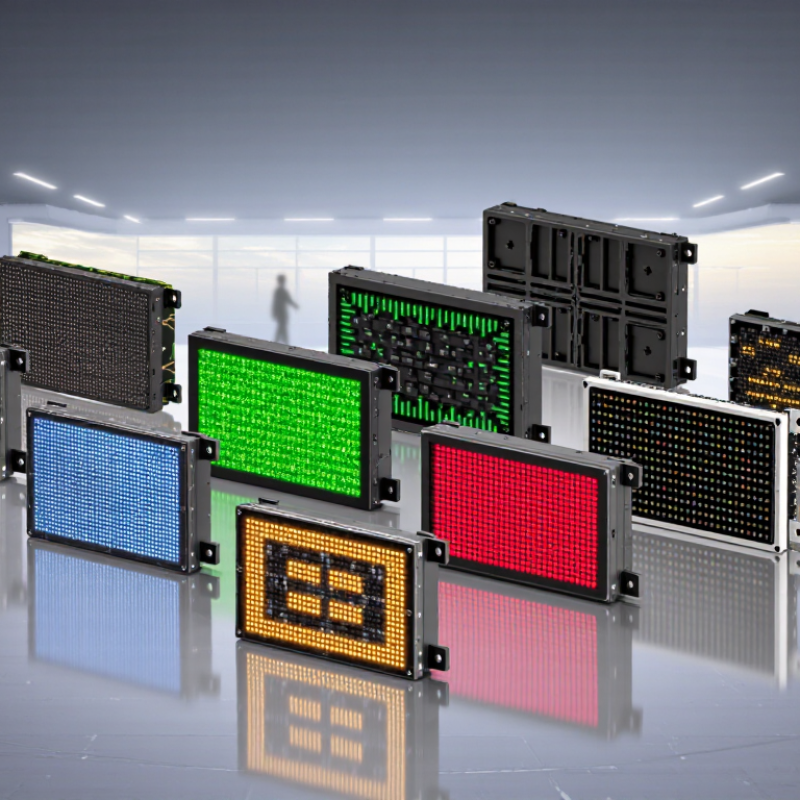
For global buyers, the best LED display module starts with pixel pitch, not marketing language.
Pixel pitch measures the distance between LED centers. A 1.5 mm module suits close indoor viewing, while 4–6 mm often fits outdoor advertising. Smaller pitch improves detail, but it increases cost and processing demands.
That assumption fails.
MarketsandMarkets estimates the global LED display market will grow strongly through 2028, driven by retail, transport, and large-format events. This growth makes specification discipline more important.
SMD type affects viewing angle, durability, and image uniformity. Common SMD designs combine red, green, and blue LEDs in one package.
Inspect solder quality, mask flatness, and dead-pixel policies before purchase. A low price can hide inconsistent modules.
Brightness must match the installation.
Indoor displays commonly use about 800–1,500 nits
Outdoor units may require 5,000 nits or more under direct sunlight.
Excessive brightness can waste energy and strain viewers. IP ratings follow IEC 60529. IP65 protects the front against dust and water jets, but the rear may need separate protection. Check both sides.
Grand View Research identifies outdoor applications as a major growth area, yet weather exposure remains highly site-specific. Wind, heat, salt, and maintenance access can change the “best” choice.
Even experienced buyers sometimes overvalue resolution and undervalue serviceability.
For global buyers, pixel pitch should match viewing distance, not simply screen size. Indoor P1.25 modules suit control rooms, premium retail, and meeting spaces viewed from about 1.5 meters. P1.5 to P2.5 modules work well in lobbies and classrooms, usually from 2 to 4 meters. Outdoor P4 modules support closer roadside or event viewing, while P6 to P10 modules remain clearer at roughly 6 to 10 meters. These ranges are practical estimates, not fixed rules.
The 2024 LED display market outlook from Grand View Research identifies fine-pitch technology as a major growth segment, driven by indoor commercial installations. Its data also reflects rising demand for higher pixel density. Meanwhile, the 2024 AVIXA Industry Outlook reports continued investment in professional visual systems worldwide. Buyers should still inspect brightness, refresh rate, cabinet protection, and power consumption. A sharp P1.25 image can look wasteful in a distant warehouse. A P10 screen may appear coarse indoors. That mismatch is easy to overlook.
Tips: Use the pixel-pitch rule as a starting point. Measure the nearest and farthest viewers before ordering. Check content at real distance, not only on a showroom sample. Outdoor modules need suitable ingress protection, but protection ratings alone do not guarantee long service life. Installation quality matters. Even reliable specifications can disappoint when ventilation, calibration, or viewing angles receive too little attention.
| No. | Module Category | Pixel Pitch | Typical Application | Module Size | Resolution per Module | Brightness | Recommended Viewing Distance | Maximum Viewing Distance | Refresh Rate | Protection Rating | Typical Maximum Power | Key Buying Advantage |
|---|---|---|---|---|---|---|---|---|---|---|---|---|
| 1 | Indoor Fine-Pitch | P1.25 | Control rooms, premium meeting rooms, broadcast studios | 320 × 160 mm | 256 × 128 pixels | 600–1,000 nits | 1.5–4 m | Up to 25 m | 3,840 Hz or higher | IP30 typical | 35–45 W | Excellent close-up image detail and smooth text rendering |
| 2 | Indoor Fine-Pitch | P1.5 | Corporate lobbies, command centers, retail interiors | 320 × 160 mm | 208 × 104 pixels | 600–1,000 nits | 1.8–5 m | Up to 30 m | 3,840 Hz or higher | IP30 typical | 35–45 W | Strong balance between visual sharpness and project cost |
| 3 | Indoor Fine-Pitch | P1.86 | Training rooms, conference halls, digital signage | 320 × 160 mm | 172 × 86 pixels | 700–1,200 nits | 2–6 m | Up to 35 m | 3,840 Hz typical | IP30 typical | 35–45 W | High-definition performance for medium viewing distances |
| 4 | Indoor Fine-Pitch | P2.0 | Auditoriums, retail displays, hotel event spaces | 320 × 160 mm | 160 × 80 pixels | 800–1,200 nits | 2–7 m | Up to 40 m | 3,840 Hz typical | IP30 typical | 35–50 W | Versatile indoor option with good clarity and lower cost |
| 5 | Indoor Standard-Pitch | P2.5 | Shopping centers, stage backdrops, indoor advertising | 320 × 160 mm | 128 × 64 pixels | 800–1,200 nits | 2.5–8 m | Up to 50 m | 1,920–3,840 Hz | IP30 typical | 35–50 W | Cost-effective choice for general indoor viewing |
| 6 | Outdoor Standard-Pitch | P4 | Outdoor storefronts, transport hubs, roadside advertising | 320 × 160 mm | 80 × 40 pixels | 4,500–6,000 nits | 4–15 m | Up to 80 m | 3,840 Hz typical | IP65 front / IP54 rear when assembled | 45–65 W | High outdoor detail where viewers are relatively close |
| 7 | Outdoor Standard-Pitch | P5 | Building façades, public information boards, sports venues | 320 × 160 mm | 64 × 32 pixels | 4,500–6,000 nits | 5–20 m | Up to 100 m | 1,920–3,840 Hz | IP65 front / IP54 rear when assembled | 45–70 W | Popular compromise between outdoor visibility, detail, and budget |
| 8 | Outdoor Standard-Pitch | P6.67 | Large-area advertising, stadium perimeters, commercial façades | 320 × 160 mm | 48 × 24 pixels | 5,000–6,500 nits | 7–25 m | Up to 130 m | 1,920–3,840 Hz | IP65 front / IP54 rear when assembled | 50–75 W | Efficient for larger screens viewed from medium distances |
| 9 | Outdoor Long-Distance | P8 | Highway signage, large façades, distant-view advertising | 320 × 160 mm | 40 × 20 pixels | 5,000–6,500 nits | 8–30 m | Up to 160 m | 1,920–3,840 Hz | IP65 front / IP54 rear when assembled | 50–80 W | Good readability and lower pixel density for large installations |
| 10 | Outdoor Long-Distance | P10 | Highway billboards, stadium screens, wide-area public displays | 320 × 160 mm | 32 × 16 pixels | 5,000–7,000 nits | 10–40 m | Up to 200 m | 1,920–3,840 Hz | IP65 front / IP54 rear when assembled | 55–85 W | Economical pixel pitch for very large screens and long viewing distances |
10 Best LED Display Modules for Global Buyers?
Rank 10 Modules Using 3,840 Hz Refresh, 5,000-nit Brightness, and Efficiency
This ranking compares ten module designs for demanding indoor and outdoor installations. The score favors a 3,840 Hz refresh rate, 5,000-nit brightness, stable power use, and practical maintenance. Rank 1 is a fine-pitch outdoor module with high-efficiency diodes and strong thermal control. It delivers clean motion beside busy roads. Rank 2 is a weather-sealed rental module, offering similar brightness with faster front access. Rank 3 is a lightweight perimeter module for sports venues. Its aluminum frame reduces installation labor. Rank 4 is a fixed-installation module with wide viewing angles and reliable grayscale performance. Rank 5 is a high-contrast indoor module for retail windows. It needs less brightness but still supports smooth video.
Rank 6 is a compact fine-pitch module for control rooms. Its lower power demand helps in continuous operation. Rank 7 is a high-brightness advertising module with reinforced connectors. Rank 8 is a flexible-curved module for architectural surfaces. Rank 9 is a budget outdoor module using efficient scan technology. Rank 10 is a basic indoor module for moderate viewing distances.
Specifications need careful checking. A quoted 3,840 Hz rate may apply only under certain driving modes. Brightness can also fall after calibration or during heat protection. I would request thermal images, power measurements, and a cabinet sample before approval. Small details matter. Uneven module gaps can ruin an otherwise sharp wall. Efficiency should be measured at normal content, not only during laboratory testing. This ranking is useful, but installation conditions may change the order.
For global buyers comparing the 10 best LED display modules, compliance evidence matters more than brightness claims. CE marking is a manufacturer’s declaration, not automatically an independent certificate. Request the signed EU Declaration of Conformity, test reports, and the exact module model number. The documents should cover applicable EMC and electrical safety requirements.
RoHS verification needs more than a supplier statement. Ask for material declarations, laboratory screening, and component traceability. The EU Safety Gate 2023 report recorded 3,412 product alerts across consumer categories, showing why paperwork and supply-chain control matter. Small documentation gaps can create expensive shipment delays. They happen.
IEC 60529 IP65 testing should match the finished display module, not only an empty enclosure. IP6X requires dust protection, while IPX5 evaluates resistance to water jets. Confirm test duration, nozzle distance, water flow, sample configuration, and laboratory accreditation. For EMC, review emissions and immunity results under realistic cable and power conditions. A technically strong module may still fail after installation. My checklist is not perfect; connector sealing, cable routing, and thermal expansion deserve another review. Choose suppliers that provide dated reports, production samples, corrective-action records, and consistent revision control for global deployment.
Global buyers should assess LED display modules beyond the quoted unit price. A low offer can hide mounting parts, spare modules, customs charges, and installation labor. Request a complete landed-cost sheet in your currency. It should separate product, packaging, insurance, freight, taxes, and local handling. In my purchasing reviews, this comparison exposes surprising gaps between suppliers. Check the warranty carefully. Confirm coverage length, pixel defects, brightness decline, replacement procedures, and response times. A five-year statement means little without practical terms.
Power input needs equal attention. Verify voltage range, frequency, connector type, protection rating, and maximum wattage. A module rated for one electrical system may need approved conversion equipment elsewhere. Ask for measured consumption during normal content, not only peak figures. This affects wiring, cooling, and monthly operating costs.
Shipping details also matter. Confirm carton dimensions, gross weight, pallet limits, tracking, and delivery responsibility. One damaged corner can delay an entire installation. I once underestimated regional port delays. The schedule looked safe, but it was not.
