How to Choose the Best Flexible PCBs for Your Projects?
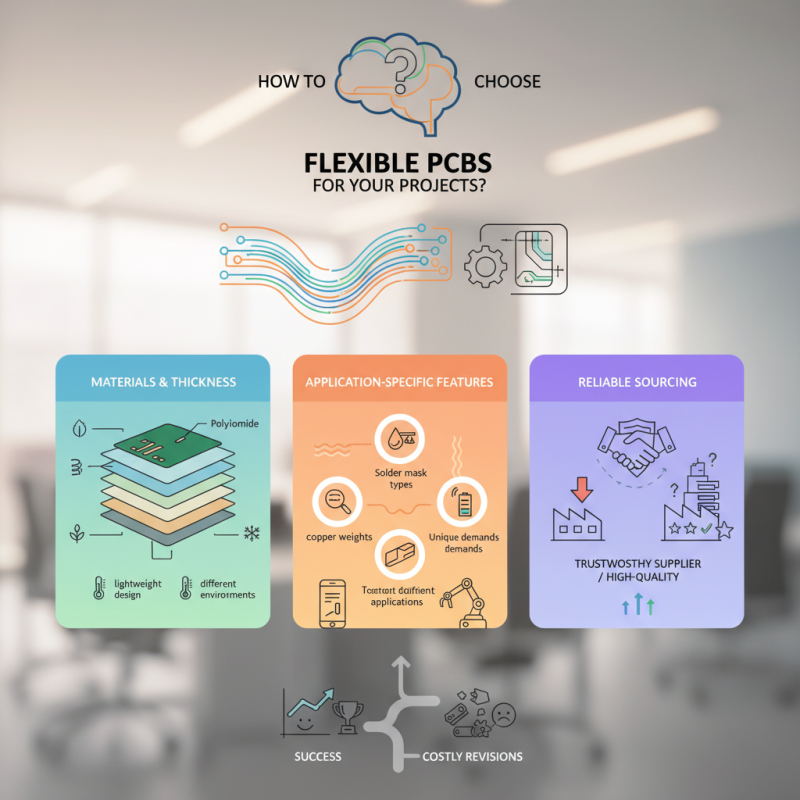
Choosing the best Flexible Pcbs for your projects can be challenging. These innovative components offer many advantages, such as lightweight design and adaptability. Yet, picking the right one requires careful consideration.
Flexible PCBs come in various materials and thicknesses, impacting their performance in different environments. Understanding these factors will help meet project specifications. Additionally, different applications may demand unique features. These can include solder mask types or copper weights.
You might face difficulties in sourcing high-quality Flexible PCBs. Some manufacturers may offer low costs but lack reliability. Ensuring you choose a trustworthy supplier is critical. An informed choice can make or break your project, leading to either success or costly revisions. Embrace the challenge of selecting Flexible PCBs wisely.
Understanding Flexible PCBs and Their Applications
Flexible printed circuit boards (PCBs) have gained popularity due to their versatility and adaptability. Understanding their applications is crucial for any project. They are ideal for compact devices. Their ability to bend and twist makes them perfect for wearables and portable gadgets.
However, their use comes with challenges. Designing a flexible PCB requires careful consideration of material choices. The substrate, usually polyimide, is essential for durability. Yet, not all projects may benefit from flexible designs. In some cases, rigid PCBs may be more suitable. Balance is key. Understanding where flexibility enhances a project is important for success.
Additionally, the manufacturing process can be complex. It often leads to higher production costs. This is something to reflect upon when considering budgets. The trade-offs in flexibility, cost, and application must be weighed. A clear understanding of these factors can lead to better decision-making for your project.
Key Factors to Consider When Selecting Flexible PCBs
Choosing the right flexible printed circuit boards (PCBs) is crucial for project success. Start by evaluating the material. Polyimide is popular for its thermal stability. Another option is polyester, which may be lighter and less expensive. Each material offers unique attributes.
Next, consider the thickness of the PCB. Thicker boards can handle more stress but may limit flexibility. A balance between durability and bendability is essential. Look closely at bending radius, too. Some projects require tighter bends than others. Understand the specific demands of your design.
Do not forget about the number of layers. Single-layer PCBs are simpler but may not fit complex designs. Multi-layer options provide more connections and functionalities. However, they can complicate manufacturing. Reflect on your project’s needs carefully before making a decision. Conducting a thorough assessment of these factors can save you time and resources in the long run.
Material Choices for Optimal Performance in Flexible PCBs
When selecting materials for flexible PCBs, performance is key. Different materials affect durability, conductivity, and flexibility. Polyimide is a popular choice, known for its thermal stability. However, it can be a bit pricey. Alternatives like polyester might not handle heat well, but they are more affordable.
Tip: Do not overlook the thickness of your materials. Thicker layers can offer better conductivity but reduce flexibility. Balance is essential.
Another aspect to consider is the adhesive layer. Some adhesives impact the flexibility of the PCB. Using a high-performance adhesive increases bond strength but can add weight.
Tip: Experiment with small batches. Test different material combinations to see how they perform under stress. You learn a lot this way.
Choosing the right materials involves trial and error. Sometimes a less expensive option might not perform as expected. Reflect on your prototypes; they reveal crucial insights. Focus on what works best for your specific project needs.
Design Considerations for Effective Flexible PCB Layouts
When designing flexible PCBs, several key considerations can influence overall performance. The board thickness is crucial; a thickness of 0.5 mm often provides a balance between flexibility and durability. Data from industry reports show that boards with less than 0.1 mm thickness can be prone to damage. Such issues can hinder functionality in high-stress applications.
The layout also requires careful attention. Trace width must be adequate to handle current requirements. A common mistake is underestimating the thermal effects. Inadequate design can lead to overheating and failures. For instance, maintaining a minimum trace width of 0.5 mm can significantly enhance performance. Additionally, the spacing between traces should comply with the minimum design rules to avoid electrical shorts.
Consider using solder masks to protect the surface. However, not all designs benefit from this. Sometimes, leaving certain areas exposed can improve connectivity. The choice of materials is equally important. FR-4 is popular, but polyimide can offer superior performance in extreme conditions. According to market surveys, companies that invest in quality materials report fewer product recalls. Balancing cost with quality remains a challenge in flexible PCB design.
How to Choose the Best Flexible PCBs for Your Projects? - Design Considerations for Effective Flexible PCB Layouts
| Parameter | Description | Recommended Value |
| Material Type | Type of substrate used for the PCB | Polyimide |
| Layer Count | Number of conductive layers in the PCB | 1-3 Layers |
| Thickness | Overall thickness of the PCB | 0.1 mm to 0.5 mm |
| Copper Weight | Thickness of the copper layer. | 1 oz/ft² |
| Bend Radius | Minimum radius for bending the PCB without damage. | 10 mm |
| Tolerance | Manufacturing tolerance for dimensions and features. | ± 0.1 mm |
| Operating Temperature | Range of temperatures the PCB can operate within. | -40°C to +125°C |
| Surface Finish | Coating on the copper pads for soldering. | ENIG (Electroless Nickel Immersion Gold) |
Evaluating Manufacturer Capabilities for Custom Flexible PCBs
When selecting a manufacturer for custom flexible printed circuit boards (PCBs), assessing their capabilities is crucial. A recent study by IPC shows that 78% of PCB defects stem from inadequate manufacturing processes. You want a partner who demonstrates expertise in advanced fabrication techniques. Look for manufacturers with certifications like ISO 9001 or IPC-A-600, which indicate adherence to industry standards.
Evaluating a manufacturer’s technology is essential. Ask about their equipment and production methods. Manufacturers that invest in automated processes can typically achieve higher quality. A report from PCB Research notes that companies using automation reported a 30% reduction in error rates. Don't overlook the importance of communication; a responsive manufacturer can help troubleshoot issues swiftly.
Lastly, consider their capacity for customization. A flexible manufacturer should adapt to specific project needs. However, some may lack the technological flexibility, which can delay projects. Researching potential partners thoroughly could save both time and money. Always push for transparency in their production timelines and capabilities. You want to establish a relationship based on trust and quality assurance.
Evaluating Manufacturer Capabilities for Custom Flexible PCBs