How to Choose the Best Industrial Palletizing Robot for Your Needs?
Choosing the right industrial palletizing robot can transform your production line. This decision is pivotal, considering that automating palletizing can increase efficiency by over 30% and reduce labor costs significantly. According to recent industry reports, the global market for industrial palletizing robots is expected to grow at a CAGR of 12% from 2021 to 2026, reflecting a strong shift towards automation in manufacturing.
When selecting an industrial palletizing robot, one must analyze various factors, including payload capacity, speed, and ease of integration. Many companies underestimate the importance of these features. They may face challenges if they opt for a model that does not match their operational needs. Industry experts recommend conducting a thorough assessment of your specific requirements before making a decision.
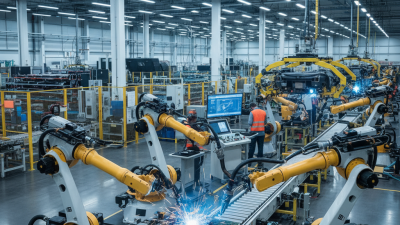
Reliability is also crucial. Choosing an industrial palletizing robot from a reputable manufacturer can significantly lower downtime. However, the initial investment might be daunting for some businesses. As automation becomes more prevalent, understanding the best practices in robot selection can ensure that your facility stays competitive and efficient.
Understanding the Basics of Industrial Palletizing Robots
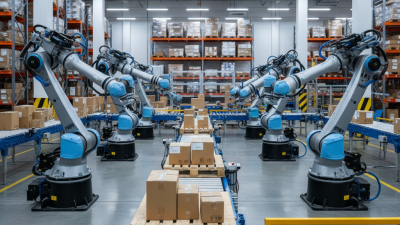
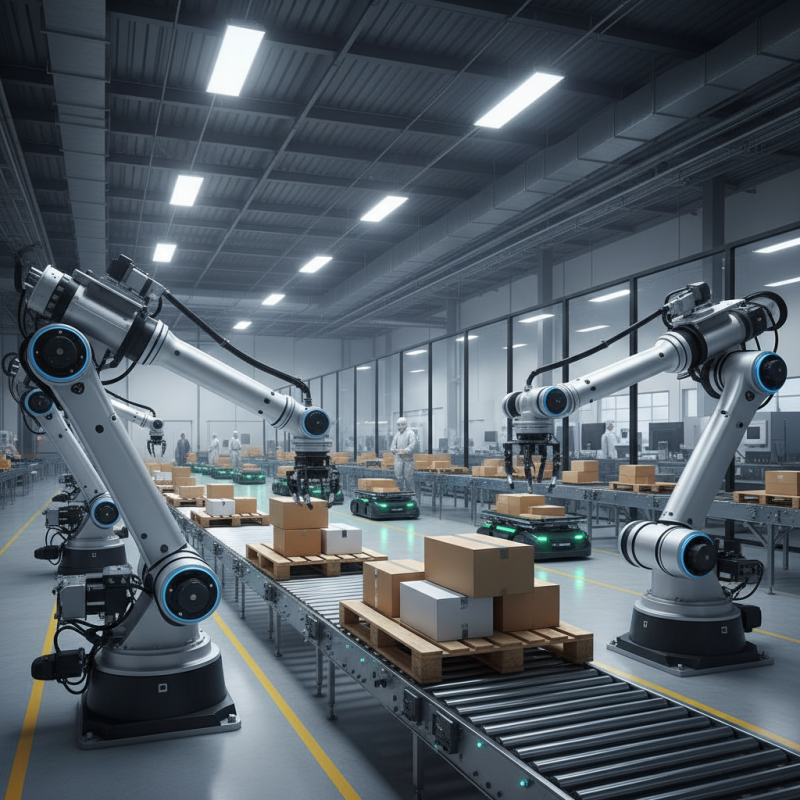
Understanding industrial palletizing robots starts with knowing their functions. These machines automate the process of stacking products onto pallets. They save time and reduce labor costs. Versatile applications make them suitable for various industries. However, not all robots are created equal.
Key factors influence your choice of a palletizing robot. Payload capacity and speed are essential considerations. Different products require different capabilities. Some robots might struggle with heavy loads or fragile items. It’s important to recognize the limitations of a selected robot.
The programming interface also matters. If it’s too complex, operational efficiency can decline. User-friendly software promotes smoother integration. Companies should ask, “Can our team easily adapt?” A robot that’s hard to operate leads to frustration. Investing in training may be necessary. Balancing between high-tech and user-friendly solutions is often a challenge for many organizations.
Identifying Your Specific Palletizing Needs and Requirements
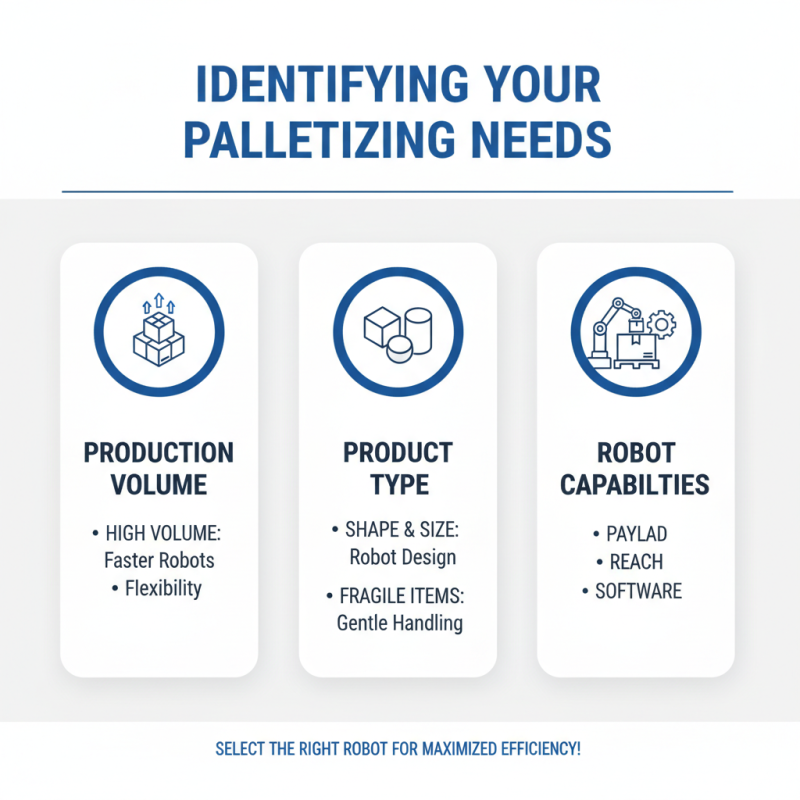
When selecting an industrial palletizing robot, understanding your specific palletizing needs is crucial. Begin by analyzing your production volume. High-volume operations may require faster robots, while lower volumes might benefit from flexibility. Consider the type of products being handled. Different shapes and sizes will affect the robot's design and capabilities. For instance, fragile items require a gentle touch.
Identify the layout of your workspace. A compact area may limit the robot's range of motion, affecting productivity. Evaluate the existing equipment and how it will integrate with a new robot. Will there be a need for additional fixtures or adaptors? These logistical details are often overlooked, yet they are key to smooth operations.
Lastly, reflect on your long-term goals. Are you planning to scale operations? A robot that meets today's needs may falter tomorrow. Choose a solution that accommodates future growth and technological advancements. Think carefully about these aspects. Unearthing your unique requirements can lead to better decision-making. Taking time to understand your needs ensures a successful implementation.
Evaluating Key Features and Capabilities of Palletizing Robots
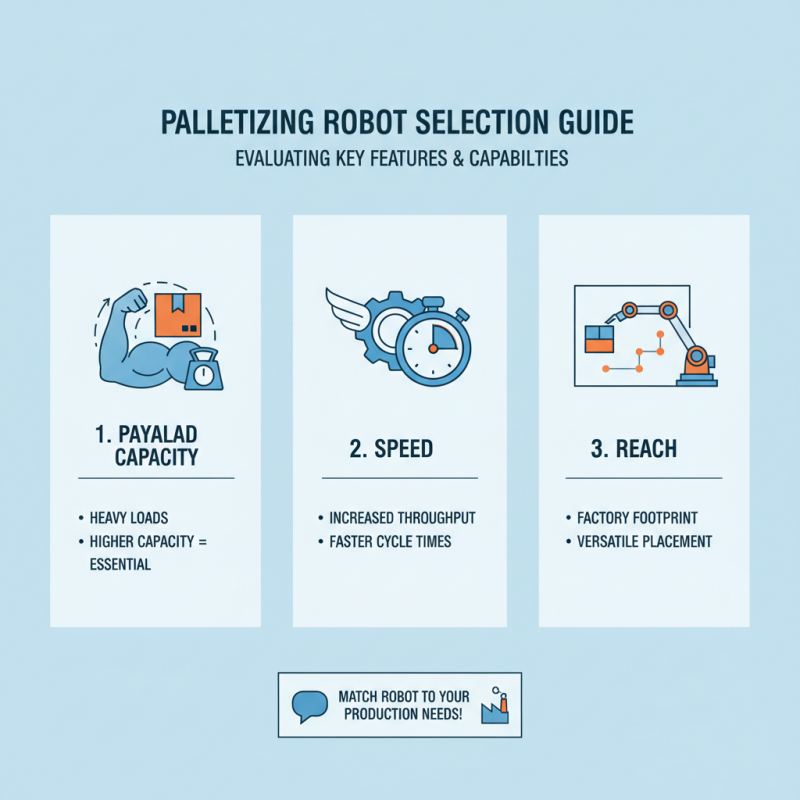
Choosing the right industrial palletizing robot requires careful evaluation of key features and capabilities. You should consider payload capacity, speed, and reach. For heavy loads, a robot with a higher payload capacity is essential. Fast robots can increase throughput. Think about your production line's specific needs. Assess how different models perform in various tasks.
Tips: Always test the robots in real conditions. This helps you see how they handle your products. Engage with experienced operators to understand their insights.
Look into the flexibility of the robot. Can it handle multiple product types? This feature can significantly enhance your operations. Also, consider the ease of integration with your current systems. Robots should simplify processes, not complicate them. Evaluate the support and training offered. Good support can save time and reduce downtime.
Evaluate the programming and user interface of the robot. An intuitive interface allows quick adjustments to production. Don't overlook the cost of maintenance over time. A cheaper initial investment might lead to higher long-term costs. Balancing upfront costs with value is crucial for smart decision-making.
Comparing Different Types of Palletizing Robots on the Market
Choosing the right palletizing robot involves understanding the various types available on the market. Common options include articulated robots, gantry robots, and collaborative robots. Each type has specific benefits based on application needs. Articulated robots are versatile for complex tasks and are often used in industries like food and beverage, with a market growth rate of 14% annually, according to industry reports.
Gantry robots excel in large area coverage and can move heavy loads efficiently. They are an ideal choice for high-speed production lines. Collaborative robots offer flexibility and safety, enabling human-robot collaboration without safety cages. Reports indicate that the market for collaborative robots is expected to reach $9 billion by 2025.
Tip: Evaluate the weight and size of your products. This factor significantly impacts the type of robot you should choose. Ensure the robot can handle your maximum load capacity efficiently.
Understanding your production volume is crucial. Some robots perform better at high speeds, while others are designed for precision. Consider future scalability as well; investing in a more versatile solution might be wiser.
Tip: Conduct a pilot test with different models. A trial period can highlight performance differences under actual working conditions. Don't overlook maintenance costs; they can influence long-term ROI significantly.
How to Choose the Best Industrial Palletizing Robot for Your Needs? - Comparing Different Types of Palletizing Robots on the Market
| Robot Type |
Payload Capacity (kg) |
Number of Axes |
Speed (Cycles/min) |
Typical Applications |
| Articulated Robot |
100 |
6 |
12 |
Food and Beverage |
| Delta Robot |
10 |
3 |
20 |
Pharmaceuticals |
| SCARA Robot |
15 |
4 |
10 |
Electronics |
| Cartesian Robot |
50 |
3 |
8 |
Automotive |
| Collaborative Robot |
5 |
6 |
6 |
Small Parts Assembly |
Assessing Cost, Maintenance, and Support Options for Your Robot Choices
When considering an industrial palletizing robot, cost is a major factor. It's important to look beyond the initial price tag. Evaluate the total cost of ownership, which includes maintenance and operational costs. Some robots may appear cheaper but could incur higher long-term expenses due to frequent repairs or inefficient performance. Ask for detailed breakdowns from suppliers.
Maintenance plays a crucial role in the robot’s efficiency and lifespan. Robots require regular checks and servicing to ensure they operate smoothly. Look for models that are easy to maintain. Some systems offer remote diagnostics that can help reduce downtime. Support options are often overlooked but are essential. A strong support network can assist during unexpected breakdowns, minimizing disruptions in production.
Don’t forget the importance of training. Familiarizing your team with the system can save time and money. Ensure the provider offers comprehensive training programs. If the support is lacking, you might face challenges in troubleshooting. Reflect on these aspects before making a decision. A well-informed choice can enhance your operational efficiency and reduce stress down the line.
Assessing Industrial Palletizing Robots: Cost, Maintenance, and Support