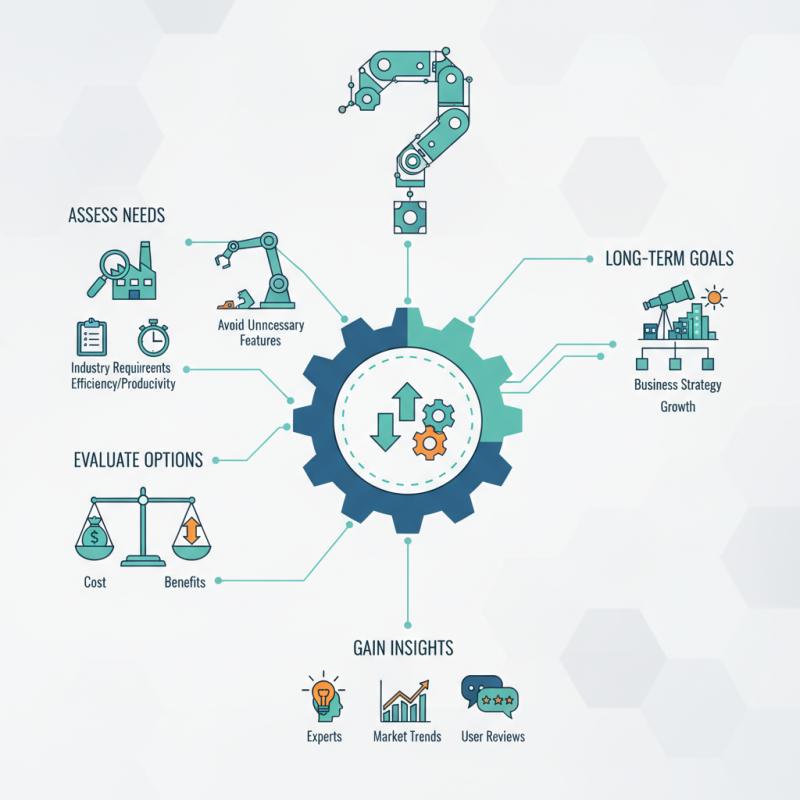
Choosing the right robotic systems can significantly impact your business. It's essential to assess your specific needs first. Every industry has unique requirements. Understanding these can guide you in selecting appropriate technologies. Robotic systems can enhance efficiency and productivity. They automate repetitive tasks and reduce human error.
However, not all robotic systems are suited for every business. Some may offer features that are unnecessary. You'll need to evaluate the cost versus the benefits. It might be tempting to choose the latest technology. But sometimes, simplicity is key. An imperfect choice can lead to wasted resources. Reflect on your long-term goals.
Engaging with experts in the field can provide deeper insights. They can share their experiences and knowledge on the best options available. Investigating market trends and user reviews can also be beneficial. Ultimately, the choice of robotic systems should align with your business strategy and goals.
When selecting robotic systems for your business, several critical factors must be evaluated. One key consideration is your specific operational needs. A 2022 report from the International Federation of Robotics indicates that 65% of industries see significant productivity gains after implementing robotics. Understanding the tasks you want to automate can help set clear objectives.
Another vital factor is the technology's adaptability to existing processes. Flexibility is crucial, especially in dynamic environments. A system that cannot integrate with current operations may lead to inefficiencies. Recent studies show that 40% of businesses face integration challenges when adopting new technologies. Therefore, assessing compatibility should not be overlooked.
The initial cost and return on investment (ROI) are also essential. While some robotic systems can have high upfront costs, a detailed cost-benefit analysis can reveal potential long-term savings. According to a 2021 McKinsey report, companies reported savings of up to 30% after two years of robotic implementation. It's necessary to balance initial expenses with expected gains to make an informed decision.
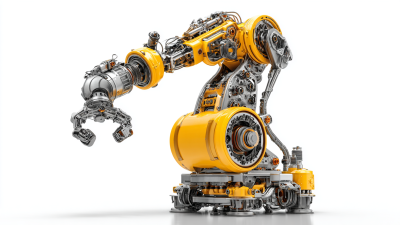
Choosing the right robotic system can transform a business. Today, various types of robotic systems cater to different applications. Industrial robots focus on manufacturing tasks. They enhance production efficiency but require specific environments. Collaborative robots, or cobots, work alongside humans. Their flexibility allows businesses to adapt quickly, yet they come with integration challenges.
In logistics, autonomous mobile robots (AMRs) are gaining traction. Reports suggest that the market for AMRs could reach $5 billion by 2025. These systems streamline warehouse operations. However, they may struggle with complex layouts. Data shows that while robotic systems can boost throughput, businesses must consider their unique needs. The balance between investment and potential return is crucial.
Service robots are increasingly prevalent in retail and healthcare. They provide customer assistance and manage repetitive tasks. Yet, the human touch remains vital in these industries. In fact, a survey indicates that 70% of customers still prefer human interaction for specific queries. Therefore, understanding different robotic systems helps businesses implement solutions while acknowledging inherent limitations and customer preferences.
| Type of Robotic System | Key Features | Common Applications | Advantages | Considerations |
|---|---|---|---|---|
| Industrial Robots | High Precision, Programmable | Manufacturing, Assembly Lines | Increased Productivity, Consistency | High Initial Cost, Requires Skilled Labor |
| Collaborative Robots (Cobots) | User-Friendly, Safe for Human Interaction | Small Assembly Tasks, Quality Inspection | Flexible, Lower Cost | Limited Load Capacity, Less Power |
| Mobile Robots | Autonomous Navigation, Sensors | Warehousing, Delivery | Increased Efficiency, Reduces Labor Costs | Navigation Challenges, Security Risks |
| Service Robots | AI Integration, Interactive Capabilities | Healthcare, Hospitality | Enhances Customer Experience, Reduces Waiting Time | High Complexity, Regulatory Issues |
| Agricultural Robots | Field Automation, GPS and Sensor Usage | Crop Monitoring, Harvesting | Increased Crop Yield, Reduced Labor Force | Weather Dependency, High Maintenance |
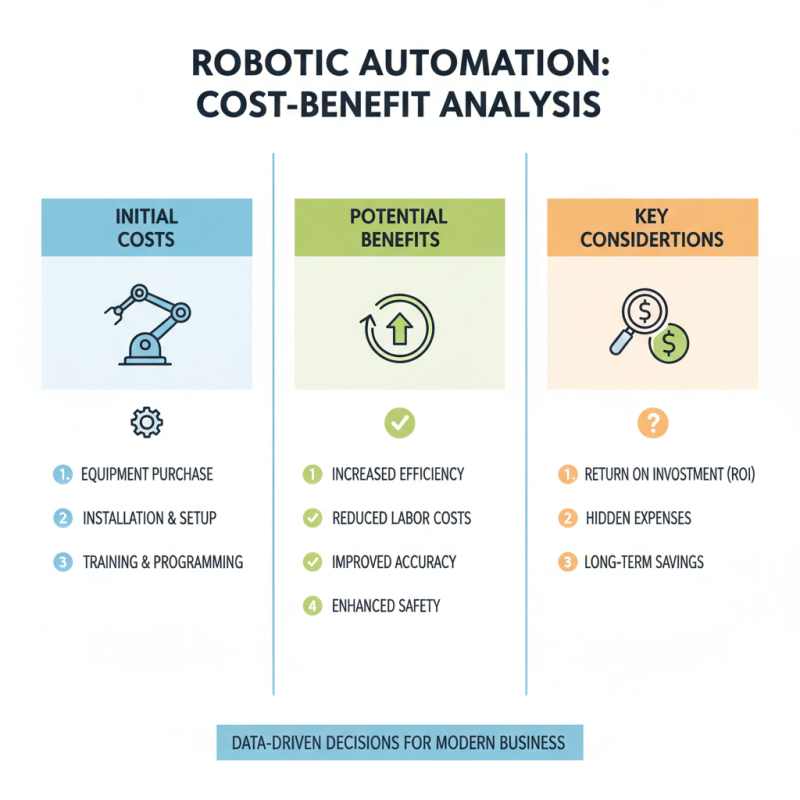
In today's fast-paced business environment, robotic automation has become a game-changer. Companies often assess the cost-benefit analysis before implementing these systems. This evaluation helps them understand the potential return on investment. Identifying the initial costs is crucial. Many businesses overlook installation and training expenses. These hidden costs can affect the overall financial analysis.
Next, it's essential to evaluate the expected productivity gains. How much time will robots save? Will they reduce errors? Businesses need detailed metrics to compare pre-automation and post-automation performance. Some may find the expected increase in efficiency may not justify the costs involved. Reflection on this balance is critical.
Moreover, consider possible disruptions during implementation. Will existing staff need retraining? How will this change the workflow? A thoughtful approach to these challenges can lead to better outcomes. By carefully analyzing both costs and benefits, businesses can make an informed decision. The right robotic system can enhance capabilities, but it requires thorough evaluation.
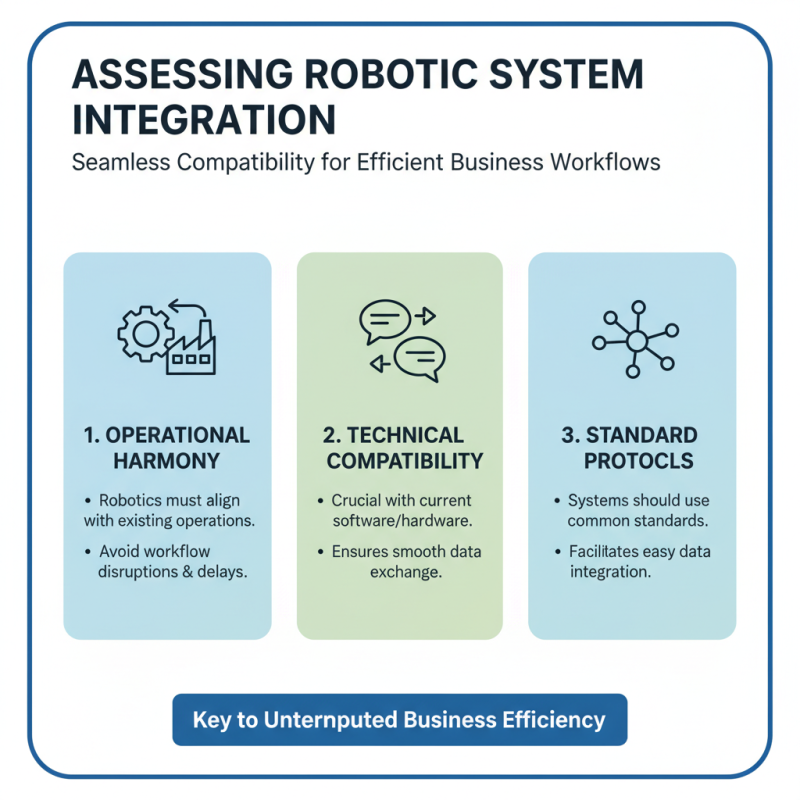
When selecting robotic systems, integration is key. Assess how well these systems can work with your existing operations. Businesses thrive on efficient workflows. Any disruption can lead to delays and frustration. Investigate the compatibility of new technology with current software and hardware. Check if systems use standard protocols for seamless data exchange.
Tips: Conduct a thorough analysis of your current infrastructure. This helps identify potential bottlenecks. Engage with your IT team to uncover challenges that could arise during integration. Sometimes, existing platforms may not support new robotic solutions, leading to additional costs.
Consider the learning curve associated with new systems. Employees may require training, which can disrupt daily operations. Not all robotic solutions come with user-friendly interfaces. Take note of potential usability issues before making a decision. Scrutinize documentation and training resources provided with the system. Ensure they meet your team's needs.
Implementing a robotic system without proper integration can be risky. Misalignment may lead to wasted time and resources. Therefore, a careful assessment is essential. Reflect on your organization’s strengths and weaknesses in technology adoption. This insight will enhance the decision-making process.
As industries increasingly adopt robotic systems, understanding current trends is vital for informed decision-making. Automation enhances efficiency, but it's essential to know which technology fits your business needs. A thorough analysis of industry trends helps identify what works and what doesn’t.
Robotics is evolving rapidly. Recent data shows that robotics adoption is rising in manufacturing, logistics, and healthcare. Companies are integrating collaborative robots to enhance productivity while maintaining safety.
However, not all solutions are one-size-fits-all. Some organizations face challenges in training staff or adapting existing processes.
Evaluating performance metrics and user feedback is crucial in choosing robotic systems. Many businesses report mixed results with automation. They often struggle with integration and return on investment. Reflecting on these experiences can lead to better selections in the future. Trends indicate a shift toward more customizable solutions. Keeping an eye on these developments can provide insights for long-term success.