What Is Cold Rolled Steel and What Is It Used For?
Cold Rolled Steel is not a different metal; it is steel processed further after hot rolling. The steel passes through rollers at room temperature, reducing its thickness and refining its surface. The result is often smoother, more consistent, and closer to its specified dimensions than hot-rolled steel. That difference matters when a part must fit neatly or show a clean finish.
You can find cold-rolled steel in appliance panels, filing cabinets, metal furniture, automotive components, and electrical enclosures. A smooth sheet catches light evenly. Its dimensions can also support more precise fabrication. But “cold rolled” does not automatically mean stronger, corrosion-proof, or suitable for every job. The exact grade, thickness, coating, and manufacturing method still matter. Not always.
This guide explains how the process works, how cold-rolled steel compares with hot-rolled steel, and where each material makes sense. It also considers common forms, benefits, limitations, and selection factors such as strength, finish, cost, and forming needs. A specification sheet can look reassuring, yet real performance depends on the application and the supplier’s stated tolerances. I would not choose by appearance alone. A bright surface is useful, but it cannot answer every engineering question. Understanding those details helps you select steel without paying for qualities your project does not need. And sometimes, the simplest choice is not obvious. That is worth checking.
What Cold Rolled Steel Is
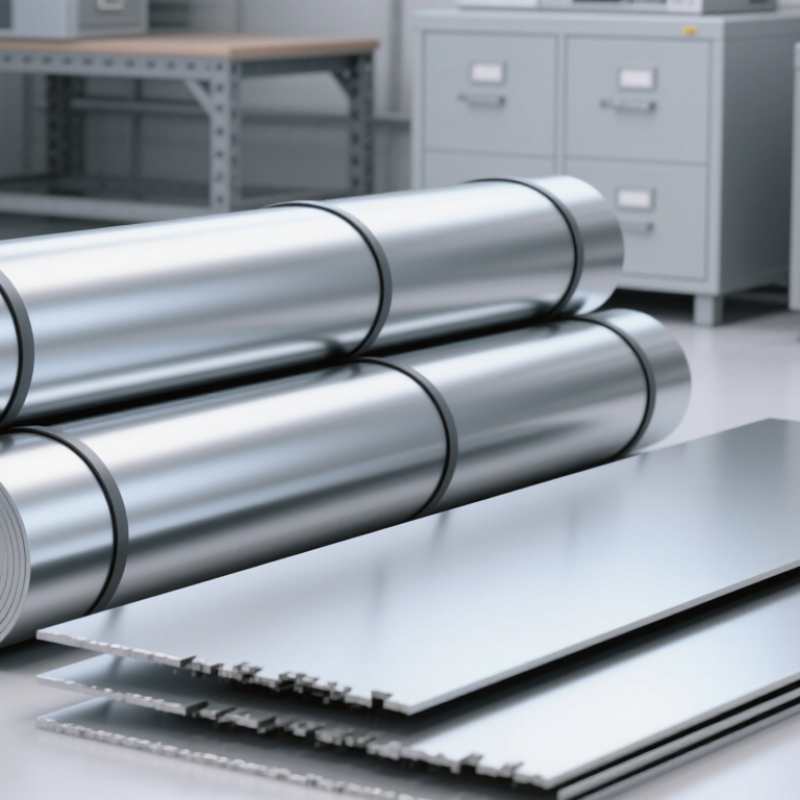
Cold rolled steel is steel sheet or strip that has been rolled thinner after hot rolling, usually at or near room temperature. Before this stage, the hot-rolled surface is commonly cleaned to remove scale. The rollers press the steel through narrow gaps, reducing its thickness and controlling its dimensions. It may arrive as a coil or as flat sheets.
The process usually produces a smoother, more even surface than hot rolling. Edges and thickness can be more consistent, too. Cold work also makes the steel stronger and harder, but often less easy to bend. That distinction matters. A thin panel may feel rigid, yet a tight bend can cause cracking if its grade and condition are unsuitable. Some cold rolled steel is annealed afterward to improve formability.
The name can be misleading. “Cold rolled” describes a manufacturing step, not a guarantee that the steel is free from later heat treatment or surface finishing. Different grades and processing routes produce different results. A clean, smooth sheet might suit a visible cabinet panel, while another grade may be selected for forming. Check the specified thickness, finish, and mechanical properties rather than relying on the label alone. Even that is not always intuitive; the finish can look similar while the steel behaves differently.
How Cold Rolling Changes Steel
Cold rolling changes steel through pressure, not heat. A cleaned slab or coil passes between rotating rolls at room temperature, squeezing it thinner and longer. For example, reducing sheet from 1.0 mm to 0.8 mm means a 20% thickness reduction. The arithmetic is simple; the metal’s response is less tidy. ASM Handbook, Volume 14B, describes how cold deformation raises strength and hardness through work hardening, while reducing ductility. Steel becomes harder to bend, but it may also spring back more after forming.
The process can improve thickness control and create a smoother surface than hot rolling. That matters when a panel must fit closely or show an even finish under paint. ASTM A1008/A1008M sets different mechanical-property requirements for cold-rolled sheet grades, rather than one strength value for every product. Grade and processing history matter. Real coils can vary, too. That part is easy to underestimate. Producers may anneal the sheet between rolling stages to restore some formability, then temper-roll it to refine its shape and surface. ASM’s guidance explains the trade-off, but a specification sheet still cannot predict every bend in a finished component. A small change in thickness or forming direction can affect the result.
Key Properties of Cold Rolled Steel
Cold rolled steel is valued for its smooth surface and consistent dimensions. It is typically made by reducing hot rolled steel at or near room temperature. The process helps control thickness closely, which matters when parts must fit together with little adjustment. Its surface is often clean and even, with fine lines visible under angled light. That finish can suit exposed panels and painted components.
The rolling process also hardens the steel through work hardening. This can increase strength and hardness, but may reduce ductility compared with a softer condition. Forming behavior depends on the grade, thickness, and any later annealing or tempering. Details matter. A sheet that bends easily in one condition may crack at a tight radius in another. Residual stress can also affect cutting or shaping, so trial pieces are useful for demanding parts.
These properties make cold rolled steel common in appliance housings, metal cabinets, furniture, and automotive components. It offers a practical balance of finish, dimensional accuracy, and strength. It is not automatically the best choice for every job; thicker sections or heavily formed parts may need a different grade or process. I would check the material specification rather than relying on the label alone.
Common Forms and Grades of Cold Rolled Steel
Cold-rolled steel is commonly supplied as coil, slit strip, or cut-to-size sheet. Rolling at or near room temperature produces a smoother surface and tighter thickness control than hot rolling. Common grades include commercial steel (CS), drawing steel (DS), deep-drawing steel (DDS), structural steel (SS), and high-strength low-alloy steel (HSLAS). ASTM A1008/A1008M defines these cold-rolled sheet classifications and their requirements. CS suits brackets and enclosures; DS and DDS are designed for more demanding forming, such as stamped appliance panels. HSLAS offers higher strength for structural parts.
Grade names are not interchangeable. World Steel Association’s World Steel in Figures 2024 reports 1,892.2 million tonnes of crude steel production worldwide in 2023. That figure describes total crude steel, not cold-rolled output, so it should not be used to estimate sheet availability. For buyers, the useful details are the specified grade, thickness tolerance, surface finish, and forming conditions. A technically suitable grade can still crack if the bend radius or tooling is wrong. Small details matter.
Tips: Check the mill test certificate against the purchase specification. Confirm whether the sheet will be painted, galvanized, or left bare. For deep-drawn parts, test a sample first; real forming behavior can differ from a simple grade label.
Where Cold Rolled Steel Is Used
Where Cold Rolled Steel Is Used
Cold rolled steel is common where a smooth surface and close dimensions matter. In cars, it can form interior panels, brackets, and body parts that need consistent shaping. Appliance makers use it for washer cabinets, refrigerator panels, and oven housings. Its clean finish also suits office furniture, filing cabinets, and metal shelving. Small details matter here: a door panel should sit flush, not wobble.
In buildings, cold rolled steel appears in light-gauge framing, interior trim, and electrical enclosures. It works well for parts made by bending, stamping, or roll forming. But it is not automatically rust-proof. Damp locations may require a protective coating, and the right grade depends on the forming process and final use. That detail is easy to overlook. Steel selection can be less straightforward than a product photo suggests.
Tips: Check thickness, finish, and coating requirements before choosing a sheet. Ask how the part will be formed. A smooth surface helps, but it does not solve every design problem.

