- sale@instructrobot.com
- Dallas, TX , United States


Choosing the right Shipping Tarp starts with the load, not the color. Consider its dimensions, shape, exposure to wind and rain, and how often it will be handled. A tarp that barely covers a flat pallet may leave sharp corners exposed on a taller load. Too much loose fabric can flap, strain tie-down points, and become difficult to secure. Fit matters.
For this guide, an illustrative expert voice, shipping-tarp specialist Morgan Reed, offers this rule: “Match the tarp to the load, the route, and the weather—not just the price.” This is an editorially written quote, not a verified statement from a real industry professional. Material weight, coatings, reinforced hems, and grommet placement can all affect durability and handling. Check the product specifications, then compare them with your actual load and securing setup. Look closely at the corners. They often take the strain.
Small details count. A tarp can look sturdy in a warehouse and behave differently in gusty weather or repeated use. This guide will help you weigh material, size, weather protection, and practical handling before choosing. It cannot predict every route or load condition; real use may reveal trade-offs a checklist misses. That is worth remembering.
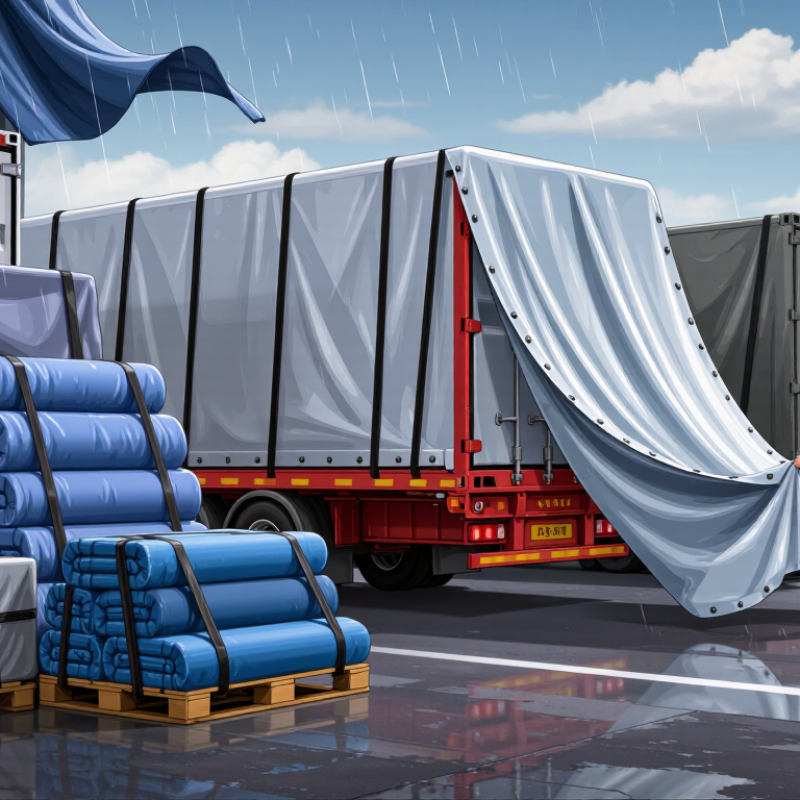
Choosing the right shipping tarp begins with the cargo itself. Measure its length, width, and height, including protruding corners or equipment. A tarp that barely covers the load may pull loose at the edges. Too much material can flap, snag, or collect water. Check the tarp’s stated size and coverage, not just its name. For sharp corners, use suitable edge protection to reduce abrasion and tearing. Small details matter.
Then consider the route and expected weather. Long highway trips expose a tarp to steady wind, road spray, and vibration; securement should prevent loose sections from lifting. Rain calls for adequate coverage and careful positioning, but avoid creating pockets where water can pool. In cold or changing conditions, some materials become stiffer, making handling and fastening harder. Check the forecast before departure and inspect the tarp at safe stops. A familiar route can still surprise you. No single tarp suits every load, and specifications do not replace checking the cargo’s handling requirements.
| Cargo and Load Characteristics | Route and Exposure | Suggested Tarp Type | Key Selection Considerations | Securing Guidance |
|---|---|---|---|---|
| Lumber or building materials with relatively square, regular loads | Highway transport with possible rain, wind, and road spray | Heavy-duty coated-fabric lumber tarp | Choose a waterproof, abrasion-resistant tarp sized to cover the load and provide enough material for secure tie-down. Consider end flaps where the load needs additional coverage. | Secure all edges and use suitable tie-down points. Keep the tarp taut to limit flapping and check that the load remains secured during the trip. |
| Machinery or equipment with irregular shapes and protruding parts | Long-distance or mixed-route travel; exposure to rain, dust, and road debris | Heavy-duty coated-fabric tarp, with padding at sharp contact points | Allow for the load’s full height and shape. Protect tarp-contact areas from sharp corners and avoid putting the tarp under excessive tension. | Use appropriate load securement independently of the tarp. Secure the cover so it cannot loosen, snag, or obscure required lights or markings. |
| Steel products or other dense, abrasion-prone materials | Highway routes where wind, rain, and vibration may be expected | Heavy-duty, abrasion-resistant coated-fabric tarp | Use protective padding over edges that could cut or wear through the cover. Confirm the tarp is suitable for the cargo’s shape and the expected exposure. | Do not rely on the tarp to restrain heavy cargo. Apply compliant cargo securement and inspect tie-downs and tarp condition at suitable stops. |
| Dry, non-sensitive cargo that needs airflow rather than rain protection | Fair-weather transport or applications where ventilation is specifically required | Mesh tarp | Mesh allows airflow but is not waterproof and may not keep out fine dust. Choose mesh only when ventilation is more important than full weather protection. | Secure the mesh evenly and ensure it does not billow excessively. Use a waterproof cover instead if the cargo must remain dry. |
| Moisture-sensitive packaged goods or cargo vulnerable to road spray | Rain-prone routes, wet seasons, or journeys with substantial exposure to spray | Waterproof coated-fabric tarp with seams and coverage suited to the load | Check the tarp’s waterproof construction, condition, and fit. A cover can reduce exposure but does not replace appropriate cargo packaging or protection from trapped condensation. | Arrange the cover to shed water where practical, avoid pooling, and secure it without leaving gaps that can admit wind-driven rain. |
| Lightweight or short-haul loads with limited exposure | Local routes and relatively mild conditions | Lightweight polyethylene tarp, if its strength and fit are adequate for the job | Generally easier to handle than heavier covers, but may be less durable under repeated abrasion or sustained wind. Inspect for tears and worn tie-down points. | Use enough secure attachment points to prevent movement. Replace a damaged tarp rather than relying on a temporary cover for a demanding route. |
| Any cargo exposed to strong winds, severe weather, or extended outdoor travel | Open highways, exposed corridors, or forecasts indicating challenging conditions | Durable tarp selected for the cargo, paired with a route-appropriate securement plan | Consider wind exposure, temperature, precipitation, tarp condition, and the load’s shape. No tarp alone guarantees protection in severe weather. | Follow applicable cargo-securement rules and equipment instructions. Reassess the load when conditions change and stop safely if the cover or securement becomes unsafe. |