What Are the Top Robotic Systems for Global Buyers?

Global buyers are no longer choosing robotic systems by speed alone. They are comparing accuracy, safety, service access, software compatibility, energy use, and long-term operating costs. A six-axis industrial arm may excel beside a welding line, while an autonomous mobile robot may perform better in a crowded warehouse. The best choice depends on the task.

Robotics pioneer Joseph Engelberger once said, “I can’t define a robot, but I know one when I see one.” His words still matter. Today’s systems are not judged only by their mechanical structure. Their sensors, control software, human-machine interfaces, and maintenance networks can determine real-world value. A machine that works perfectly in a showroom may struggle with dust, uneven floors, changing product sizes, or limited local support.

This guide examines the top robotic systems for global buyers through practical evidence. It considers industrial robots, collaborative robots, mobile platforms, and specialized service machines. Each category has strengths and compromises. Some deliver impressive precision but require expensive integration. Others are easier to deploy but offer narrower capabilities. No single system fits every market.

Buyers should also question polished product claims. Total ownership costs can remain unclear. Training may be underestimated. Integration delays happen. Our comparison focuses on measurable performance, supplier reliability, scalability, safety features, and after-sales support. These details often matter more than a headline-grabbing payload or cycle time. The goal is not to name one universal winner, but to identify which robotic systems make sense for different operating environments.
What Are the Top Robotic Systems for Global Buyers?

Industrial Robots: IFR Recorded 541,302 Global Installations in 2023

What Are the Top Robotic Systems for Global Buyers?

Industrial Robots: IFR Recorded 541,302 Global Installations in 2023

Industrial robots remain central to global manufacturing. The International Federation of Robotics reported 541,302 installations in 2023. This was slightly below the previous record, yet it represented strong demand across automotive, electronics, metal, and food production. By the end of 2023, more than 4.2 million industrial robots were operating worldwide, according to World Robotics 2024. Articulated robots led many complex handling, welding, and assembly tasks. SCARA systems served fast, precise small-part production. Delta robots supported high-speed packaging. Mobile robotic systems also gained attention, although their deployment data is less consistent across markets.

The figures show scale, not automatic success. A robot may stand idle when tooling, software, or worker training is weak. I have seen projects focus on arm speed while ignoring loading time and maintenance access. That is an expensive blind spot. Global buyers should compare payload, reach, cycle time, safety functions, integration support, and total operating cost. Regional electricity standards and worker-protection rules also affect installation schedules. IFR data offers authority, but buyers still need site-level validation.

Tips: Test one representative production cell before a full rollout. Measure downtime, changeover time, and rejected parts. Ask for maintenance records, not only performance claims. Leave space around the system. Real factories are rarely perfect.
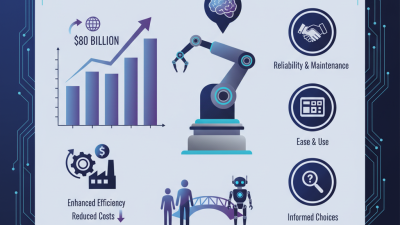

Global Industrial Robot Installations

Annual installations increased substantially from 2019 to 2023. According to the International Federation of Robotics, 541,302 industrial robots were installed worldwide in 2023.

Data source: International Federation of Robotics (IFR), World Robotics reports. Figures for 2019–2022 are rounded global installation totals.

Collaborative Robots: Comparing Safety, Payload, and IFR Market Trends

Global buyers are paying closer attention to collaborative robots, or cobots, as factories seek flexible automation. The International Federation of Robotics reports continued growth in robot adoption across manufacturing. However, market growth does not make every cobot suitable for every workplace.

Safety begins with risk assessment, not a product label.

A cobot may limit force and speed near workers, but tools, sharp parts, and unexpected movement still create hazards. Engineers should test stopping distance, pinch points, guarding, and emergency access. In one practical check, a robot carrying a metal component should stop safely before reaching a worker’s hand. Small details matter. Certification supports reliability, but installation quality matters too.

Payload needs careful interpretation.

A stated payload may exclude grippers, sensors, and cables. A six-kilogram application could require a robot rated for more than six kilograms after tool weight and motion forces are included. Reach, repeatability, cycle time, and mounting position also affect performance. IFR trends show rising interest in smaller systems for electronics, packaging, and light assembly. Larger payload cobots remain useful for machine tending and material handling. Yet cycle speed can decline under heavy loads. That trade-off is easy to overlook.

Buyers should request independent test records, regional compliance documents, service response times, and training details.

Datasheets rarely reveal every integration difficulty. A careful pilot run may expose vibration, awkward access, or operator hesitation before full deployment. Mistakes happen. Reliable decisions leave room to question optimistic figures.

Mobile Robots and AMRs: Evaluating Logistics Systems by Fleet Performance

What Are the Top Robotic Systems for Global Buyers?

Mobile Robots and AMRs: Evaluating Logistics Systems by Fleet Performance

Global buyers should evaluate mobile robots through fleet performance, not impressive demonstrations. An effective system completes missions consistently across changing warehouse conditions. Key measures include mission success rate, average travel time, traffic recovery, and equipment uptime. During a practical pilot, record results by shift and workload. A robot that performs well for two hours may struggle during a full day.

Fleet coordination matters as much as individual speed. Good software assigns tasks according to location, battery level, and urgency. It should also manage blocked aisles without creating long queues. Watch the charging process closely. Frequent battery changes can reduce labor savings. Delayed charging can stop an entire workflow.

Small details reveal system quality.

Operators need clear alerts and simple controls. Maintenance teams should access fault records without waiting for outside support. Safety sensors must respond reliably around people, shelves, and loading areas. Local floor conditions also matter. Dust, uneven surfaces, narrow turns, and seasonal heat can affect performance. A global buyer should test these conditions before making a purchasing decision.

No fleet is perfectly autonomous. That expectation can distort the evaluation. Human intervention remains necessary during unusual congestion, damaged pallets, or changing storage layouts. I would rather choose a slower fleet with stable recovery than a faster fleet that needs constant supervision. The most reliable decision comes from transparent data, repeated trials, and honest attention to operational weaknesses.

Professional Service Robots: Applying IFR Sales Data to Global Buyer Needs

What Are the Top Robotic Systems for Global Buyers?

Professional service robots are moving from demonstrations into daily operations. The International Federation of Robotics reported nearly 200,000 professional service robots sold in 2023. Its World Robotics 2024 report identified logistics, hospitality, cleaning, and medical applications as major growth areas. These figures matter to global buyers because demand now reflects practical workplace problems, not only technical interest.

Logistics robots suit warehouses with repetitive transport routes and changing inventory. Cleaning systems help large facilities maintain floors across long operating hours. Healthcare robots can support delivery, disinfection, and assisted mobility, but deployment needs careful risk assessment. A robot may perform well in a showroom, then struggle with narrow doors, reflective floors, or unstable wireless coverage. That happens.

Buyers should compare useful output, not advertised speed. Check payload, navigation accuracy, battery cycles, uptime, and local maintenance response. The International Federation of Robotics also emphasizes application-specific performance and service support in its market analysis. A low purchase price can hide integration costs, staff training, spare parts, and software updates. Regional safety requirements and data protection rules also need review before installation.

Tips: Request a site trial with real floors, real traffic, and real staff. Measure completed tasks per hour. Ask for failure logs, repair times, and total operating costs. Keep one manual backup process during early deployment. The numbers may disappoint at first, but they reveal whether the system creates value.

What Are the Top Robotic Systems for Global Buyers? — Professional Service Robots: Applying IFR Sales Data to Global Buyer Needs
Professional Service Robot Segment Approx. Global Units Sold in 2022 Reported Annual Change Typical Buyer Need Common Operating Environment Global Buyer Priority Market Readiness
Transportation and Logistics Robots 86,000 Approximately +44% Automated movement of materials, parcels, goods, and inventory between work areas Warehouses, factories, distribution centers, hospitals, and airports High throughput, navigation accuracy, fleet management, safety integration, and battery uptime ★★★★★
Hospitality Robots 24,500 Approximately +125% Delivery, guest assistance, room service, reception support, and routine customer interaction Hotels, restaurants, shopping centers, and public venues Multilingual interfaces, reliable indoor navigation, simple deployment, and guest acceptance ★★★★☆
Professional Cleaning Robots 12,000 Approximately +8% Floor cleaning, vacuuming, scrubbing, and scheduled maintenance of large areas Commercial buildings, airports, hospitals, retail sites, and manufacturing facilities Cleaning coverage, obstacle detection, low supervision, docking automation, and service support ★★★★☆
Medical Robotics 9,300 Approximately +5% Surgical assistance, rehabilitation, diagnostics support, and patient-care workflows Hospitals, clinics, rehabilitation centers, and laboratories Regulatory compliance, clinical validation, cybersecurity, training, and lifecycle maintenance ★★★☆☆
Agricultural Robotics 8,000 Strong growth from a smaller base Harvesting, crop monitoring, precision treatment, milking, and farm-work automation Farms, greenhouses, orchards, vineyards, and livestock operations Outdoor reliability, weather resistance, terrain handling, seasonal utilization, and labor savings ★★★☆☆
Inspection and Maintenance Robots Included in the professional service robot total Segment varies by application Inspection of infrastructure, equipment, pipelines, buildings, and hard-to-access areas Energy facilities, utilities, construction sites, industrial plants, and public infrastructure Sensor performance, remote operation, data quality, environmental protection, and report integration ★★★☆☆
Professional Service Robots — Total Nearly 158,000 Approximately +48% Automation of repetitive, labor-intensive, hazardous, or service-oriented professional tasks Commercial, industrial, healthcare, agricultural, logistics, and public-sector settings Total cost of ownership, interoperability, safety certification, local support, and measurable return on investment ★★★★★
Source: International Federation of Robotics (IFR), World Robotics service-robot market reporting for 2022. Figures are rounded global estimates published for professional service robot segments; segment totals may not add precisely because of rounding, classification differences, and overlapping application categories.

Selection Criteria: Total Cost, Integration, Standards, and Regional Support

Global buyers should judge robotic systems by total value, not the purchase price alone. A lower-priced unit may require costly tooling, custom software, training, and spare parts. Calculate installation, programming, energy use, maintenance, downtime, and operator support over five years. Ask for realistic cycle-time data.

Integration often decides success.

Check whether the robot communicates with existing controllers, vision systems, safety devices, and production software. Review network protocols, data formats, and diagnostic access before signing a contract. A pilot cell can reveal problems that a polished demonstration hides. This step is sometimes skipped.

Standards also deserve careful attention. Confirm compliance with relevant industrial robot and collaborative robot safety requirements, including risk assessment procedures and emergency-stop design. Documentation should be clear, current, and available in the local working language. Regional support matters just as much. Buyers should verify technician response times, local inventory, training options, and remote service coverage. A system may perform well in one country but struggle where qualified engineers are scarce. In practice, supplier promises can sound stronger than service contracts. Read the exclusions. Compare support during holidays, customs delays, and software updates. The best choice is not always the fastest robot. It is the system that integrates safely, operates reliably, and remains supportable in its actual region.