What Are the Top Under Mount Kitchen Sink Types?
Choosing an Under Mount Kitchen Sink involves more than matching a finish to your countertop. The right type affects daily cleaning, noise, durability, and installation costs. Stainless steel remains a practical choice for busy kitchens. It handles hot pans well and usually offers dependable corrosion resistance. However, thin steel can sound sharp when water hits the bowl. Look for thicker gauges and quality sound-absorbing pads. Deep single bowls suit large cookware, while double bowls support separate washing and rinsing. That convenience can reduce usable space.
Fireclay sinks provide a bright, substantial appearance. Their smooth surfaces resist many common stains, although heavy impacts may cause chips. Granite composite offers strong color consistency and a textured, modern feel. It can hide water marks better than polished materials. Copper creates visual warmth, but its finish changes naturally over time. That character is not for everyone. Some homeowners expect a fixed color and feel disappointed later.
Installation deserves equal attention. The cabinet must support the sink’s weight, especially with fireclay or composite models. Countertop fabricators also need the exact sink template before cutting the opening. A small measurement error can create an expensive delay. From practical fitting experience, faucet reach and drain placement often receive too little attention. They matter every day. No single material wins every kitchen. Your cooking habits, cleaning routine, cabinet structure, and design expectations should guide the decision. This guide compares the leading Under Mount Kitchen Sink types, their strengths, limitations, and the details that are easy to overlook.
How Undermount Kitchen Sinks Are Classified
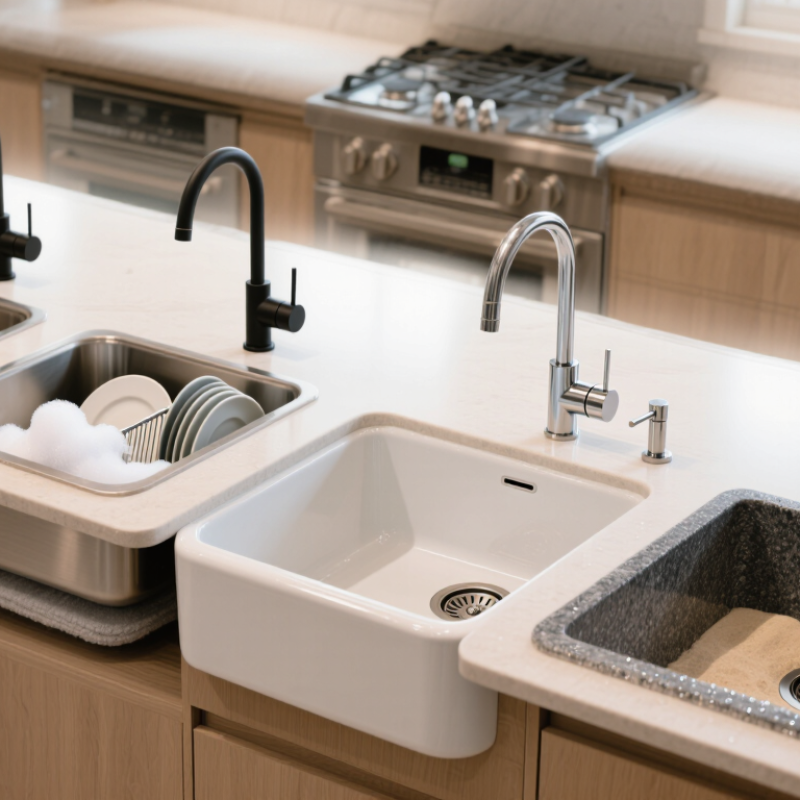
Undermount kitchen sinks are commonly classified by how the countertop meets the sink’s rim. In a zero-reveal installation, the counter edge sits almost flush with the bowl opening. This creates a clean line and makes crumbs easy to sweep into the sink. A positive-reveal installation leaves part of the rim visible. It can be easier to inspect and clean, though the exposed edge may collect residue. With a negative reveal, the countertop extends slightly over the bowl. The look is seamless, but accurate fitting matters.
Small differences show. A few millimeters can change the appearance and cleaning routine.
Sinks are also grouped by bowl layout. Single-bowl models provide an open basin for large pans, while double-bowl designs divide washing and rinsing tasks. Some have unequal bowls, which can preserve space for a stockpot while keeping a smaller basin available. Material is another classification: stainless steel is relatively light and practical, while fireclay and composite options are heavier and need suitable cabinet support. Check the cabinet dimensions, faucet reach, and countertop material before choosing. Stone and solid-surface counters generally support undermount installation; some laminate surfaces may require special edge treatment. A tidy reveal can look excellent in a showroom, yet daily use may expose awkward corners or splash patterns. Measuring twice helps, but it does not replace careful installation.
Top Undermount Kitchen Sink Types: How They’re Classified
Undermount sinks are commonly classified by bowl configuration. Single-bowl and triple-bowl designs have one and three basins, respectively. Double-bowl sinks have two basins; they may be equal in size or offset, with one basin larger than the other.
Types of Undermount Sinks by Material
Stainless steel undermount sinks suit busy kitchens where cookware gets heavy use. The material is relatively light, resists rust, and is easy to clean with mild soap. Its surface can scratch, though. A brushed finish tends to disguise small marks better than a polished one. Check the steel’s thickness and sound insulation before choosing; a thin basin may feel noisy when water hits it. This detail is easy to overlook.
Granite composite and fireclay offer a different feel. Composite sinks are made with stone particles and resin, creating a dense surface that can handle everyday impacts and hide water spots. Dark colors may show mineral residue, so local water hardness matters. Fireclay has a smooth, glazed finish and a solid, substantial feel. It resists stains well, but the glaze can chip if a heavy pan lands hard. Cast iron with enamel is another option: glossy and available in many colors, yet heavy enough to require sturdy cabinet support. Measure the cabinet and confirm countertop compatibility before ordering. Material alone does not determine a good fit; mounting support and sink care matter, too.
Types of Undermount Sinks by Bowl Configuration
Types of Undermount Sinks by Bowl Configuration
Bowl configuration shapes how an undermount sink works during everyday cooking. Houzz’s 2024 U.S. Kitchen Trends Study reports that single-bowl sinks were selected by 51% of renovating homeowners, while 45% chose double-bowl models. The figures suggest both layouts remain practical choices. A wide single bowl can fit a stockpot or baking tray without awkward tilting. It also leaves more uninterrupted space for rinsing vegetables. But dishes can quickly occupy the whole basin.
Double-bowl undermount sinks divide the workspace for washing and rinsing, or for separating food scraps from clean cookware. Smaller bowls may not accommodate wide pans, though. Measure your largest pot before choosing; cabinet width alone can be misleading. Low-divide models offer a middle ground, with a divider that sits below the sink rim. A pan can span the two sections more easily, but water and debris may cross the divider. That trade-off is easy to overlook.
For compact kitchens, a one-and-a-half-bowl layout adds a smaller prep or disposal area beside the main basin. It can be useful, yet the secondary bowl may feel too shallow for regular tasks. Check bowl depth, drain placement, and faucet reach together. Houzz’s figures describe homeowner selections, not a universal performance test. Your cooking habits matter more than a popular configuration.
Specialty Undermount Sink Designs
Specialty undermount sinks solve specific kitchen problems, not just aesthetic ones. Workstation designs add a ledge for sliding cutting boards, colanders, or drying racks above the basin. This keeps wet vegetables near the faucet and frees counter space.
Houzz’s 2024 U.S. Kitchen Trends Study found that 77% of renovating homeowners upgraded their kitchen sink. That figure reflects survey respondents, not every household, but it shows how often sinks feature in remodels.
Low-divide double-bowl models suit cooks who rinse greens while soaking a pan. A single-bowl model with a sloped base can instead guide water toward the drain and accommodate bulky roasting trays. Check the cabinet width and drain location before choosing either style. Small mismatch, expensive headache. Some specialty sinks also include sound-dampening pads, useful when dishes clatter in an open-plan kitchen. Yet accessories can crowd the basin, and a fitted board may be awkward to store once removed.
For daily use, compare bowl depth, corner shape, and the clearance beneath the countertop. Deeper bowls hide dishes from view, but they may feel uncomfortable for shorter users. The National Kitchen & Bath Association’s kitchen planning guidance emphasizes user needs and clearances; apply that principle to the sink’s actual users, not only a showroom display. Bring a large pot to test the opening if possible.
One detail is easy to miss: undermount installation depends on a secure, well-sealed countertop cutout, so confirm material compatibility with a qualified fabricator.
How to Compare Undermount Sink Types for Different Kitchens
Choosing an undermount sink means comparing more than appearance. Start with bowl layout. A single-bowl sink gives large pots and baking trays room to lie flat, but it offers no separate basin for rinsing. A double-bowl design supports divided tasks; check that each bowl is wide enough for your usual cookware. Small kitchens may benefit from a compact single bowl, while busy households often prefer two usable basins. Measure the cabinet and countertop cutout before deciding. A deep bowl can hold splashes, yet it may feel uncomfortable if you are short or the counter is high.
Material changes daily care. Stainless steel is relatively light and handles frequent use, though thin models may sound louder when water hits the base. Look for sound-dampening pads and a finish that suits your tolerance for visible water marks. Fireclay and enamel-coated cast iron feel solid and can resist scratches, but their weight may require stronger cabinet support. Check countertop compatibility with the installer, since undermount sinks need a secure, sealed edge. Details matter. Also consider drain placement: a rear drain can leave more usable space below, but plumbing may not align easily with an existing cabinet. There is no perfect type. Even careful comparisons can miss how a sink feels during a full week of cooking.

