- sale@instructrobot.com
- Dallas, TX , United States


Choosing the best home robot suppliers in China takes more than comparing factory prices. A polished product video cannot show how a robot handles a dark hallway, a loose charging cable, or a rug edge. Real homes vary. Buyers need evidence from actual testing, not promises alone.
Robotics researcher and iRobot co-founder Rodney Brooks captured an important principle: “The world is its own best model.” For home robots, that means performance depends on meeting everyday conditions, not only succeeding in a controlled demonstration. This guide examines Chinese suppliers through practical questions: Can their robots navigate cluttered rooms? Are sensors, batteries, and replacement parts clearly specified? Do they support software updates, product customization, and dependable after-sales service? Small details matter.
The comparison also considers manufacturing experience, quality controls, certifications relevant to the target market, and communication during product development. These factors can help importers, retailers, and brands assess suppliers more carefully. Yet no checklist removes every risk. Supplier capabilities change, and a strong sample may not represent every production batch. That is not enough. Ask for recent test records, clarify warranty terms, and verify claims independently before making a decision. A useful shortlist should distinguish proven capabilities from marketing language—and acknowledge where public information remains limited.
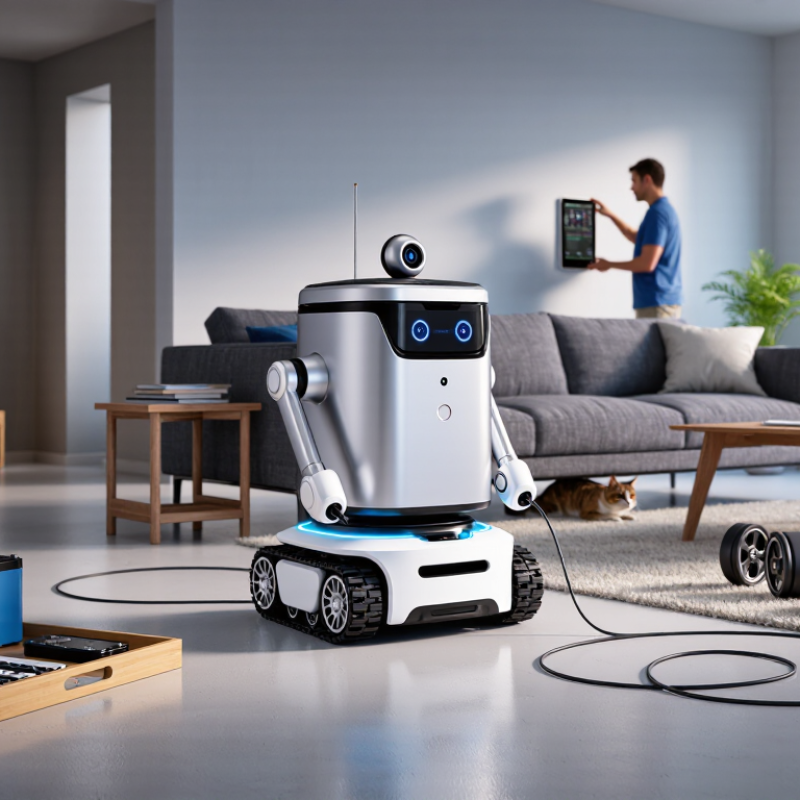
A home robot supplier in China is more than a factory that assembles a moving device. A reliable supplier can explain how its robot senses furniture, handles floor transitions, and responds when a wheel gets stuck. Ask to see test records for navigation, battery performance, and repeated use—not only a polished product video. Real homes are messy.
Engineering depth matters. Look for teams that can discuss sensor placement, software updates, component sourcing, and repair procedures in clear terms. They should provide product specifications, user instructions, and consistent quality checks across production batches. A sample unit should behave much like the units later delivered. That sounds basic, but it deserves verification.
After-sales support is part of the product. Check how the supplier diagnoses faults, supplies replacement parts, and communicates technical changes. Ask how long common repairs typically take, and whether support staff can explain issues without vague promises. No supplier gets every detail right on the first pass. A careful buyer should also test the robot in the intended home environment, because a showroom floor cannot reveal every limitation. Good suppliers welcome specific questions, share evidence, and acknowledge what their robots cannot yet do.
The best supplier depends on the product category, target market, and service requirements. Use this evidence-based comparison framework to assess suppliers without relying on brand claims or unsupported rankings.
| Evaluation Dimension | What a Capable Supplier Provides | Evidence to Request | Why It Matters |
|---|---|---|---|
| Product-category experience | Relevant experience with the intended home robot category, such as floor-cleaning, window-cleaning, lawn-care, or companion robots. | Product specifications, sample units, design records, and references for comparable products, where available. | Different robot types have different navigation, sensing, cleaning, mobility, and safety requirements. |
| Engineering and system integration | In-house or clearly managed capabilities for mechanical design, electronics, firmware, sensors, navigation, and app integration. | Technical documentation, development milestones, software update process, and a demonstration of the proposed product. | Reliable operation depends on hardware and software working together, not just on assembly of components. |
| Manufacturing and quality control | Documented production processes, incoming-component checks, in-process inspections, and final product testing. | Quality procedures, inspection records, defect-handling process, and a factory or production-line audit. | Consistent controls help reduce variation between samples and production batches. |
| Safety and regulatory readiness | A product-specific compliance plan for the destination market, covering applicable electrical, battery, radio, and chemical requirements. | Test reports and certificates from qualified laboratories, with product models and report scope matching the offered unit. Confirm applicable requirements for each market. | Requirements differ by product design and destination. A certificate for another model may not establish compliance for the product being purchased. |
| Battery and charging controls | Clear battery specifications, charging protections, and a documented process for battery transport and handling. | Battery test documentation and, when applicable, the UN 38.3 test summary for the battery type being shipped. | Battery safety and transport documentation are important for products using rechargeable lithium batteries. |
| Reliability and product testing | Repeatable tests for relevant functions, such as navigation, obstacle handling, charging, cleaning performance, and operation over time. | Test plans, pass/fail criteria, sample test results, and records of corrective actions for failures. | Tests should reflect the product’s intended use and help identify problems before mass production. |
| Software, connectivity, and privacy | Defined app and firmware support, a process for security updates, and clear handling of user data and connected-device features. | Software support policy, update procedure, data-flow information, and an explanation of account and cloud-service dependencies. | Connected features can affect long-term usability, data handling, and the customer’s dependence on ongoing services. |
| Customization and order flexibility | Clearly scoped options for hardware, language, packaging, app interfaces, and other requested changes, subject to technical feasibility. | Written specifications, sample approval requirements, development timeline, tooling terms, and change-control process. | Documented scope helps prevent misunderstandings about what is included in a customized product. |
| Supply continuity and spare parts | Visibility into key components, production lead times, replacement-part availability, and plans for component changes. | Lead-time assumptions, parts list, end-of-life notification process, and proposed spare-parts arrangements. | Component availability and replacement support can affect delivery schedules and product maintenance. |
| Warranty and after-sales support | Written warranty terms, a practical repair or replacement process, and access to troubleshooting information and parts. | Warranty policy, response and escalation process, repair instructions, and the list of serviceable parts. | Clear support terms help buyers plan for customer service after products reach the market. |
Selection guidance: Compare suppliers using the same product specification and request verifiable, model-specific evidence. Treat this table as a due-diligence framework rather than a definitive ranking; the right supplier is the one that can demonstrate fit for your product, market, quality expectations, and support needs.