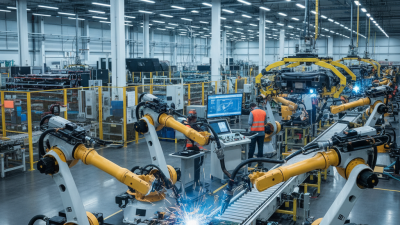
Choosing a robot automation partner is a practical decision, not just a comparison of brand names. Global buyers must match equipment to real production needs, from payload and reach to cycle time, floor space, and existing controls. A robot that looks impressive in a demonstration may still be unsuitable for a crowded packaging line or a high-mix machine shop. Details matter.
This guide introduces 10 robot automation companies serving buyers across international markets. It highlights the capabilities and considerations that can help teams build a shortlist, including product range, integration support, service coverage, and access to spare parts. Strong documentation and clear training plans also matter. A smooth installation depends on people, processes, and equipment working together.
No provider fits every factory. A buyer should confirm specifications directly, request application-specific references, and ask how support works after commissioning. Response times can differ by region. So can integration costs. Available information may also be uneven, and a polished product page cannot answer every operational question. Treat this overview as a starting point, then compare vendors against your own line layout, safety requirements, and maintenance capacity. The best choice is the one that performs reliably in your conditions—not simply the one with the most familiar name.

Robot automation companies turn production goals into working systems. Their work often includes selecting robot arms, grippers, cameras, conveyors, and control software. They also program motion paths, connect equipment to factory systems, and test cycle times. A palletizing cell, for example, must place cartons steadily while leaving workers safe access to nearby stations. Small details matter.
The International Federation of Robotics’ World Robotics 2024 report counted 4,281,585 industrial robots operating worldwide in 2023, with 541,302 installed that year. Those figures show why integration quality matters: a robot alone does not create a reliable production line. Automation providers assess the task, layout, product variation, and maintenance needs, then commission the complete cell. They may also train operators and provide service support. Downtime can be costly.
Buyers should ask how a proposed system handles changeovers, faults, and spare parts—not only its advertised speed. A fast cycle on a demonstration floor may slow when cartons vary or sensors collect dust. That gap is easy to underestimate. Project scope also differs: some providers build turnkey lines, while others integrate selected equipment. Clear acceptance tests and documented support terms help buyers compare proposals more reliably.
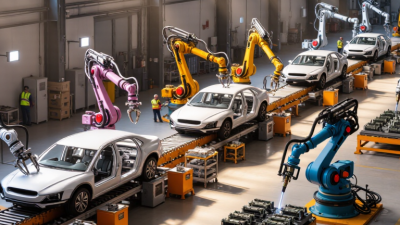
For global projects, evaluate automation providers beyond the quoted machine price. Ask where they have installed comparable systems and how they handled different production volumes, site conditions, and support needs. Request reference projects with similar cycle times and product variation. Details matter.
Review the proposed scope line by line. It should identify which party handles mechanical design, controls integration, operator training, and commissioning. Ask for sample acceptance criteria, such as cycle time, reject rate, and uptime measurement periods. A clear factory acceptance test and site acceptance test can reveal gaps before shipment. Check whether manuals, alarms, and training materials are available in the languages your teams use. Small omissions create delays.
Service access deserves equal attention. Confirm local response hours, remote troubleshooting methods, spare-parts availability, and escalation contacts for each operating site. Ask how software updates are documented and how production data is protected. Then verify performance claims through customer references, not only polished presentations. No scorecard removes uncertainty. Some details will change after installation, and that is normal; record assumptions and change-control steps before signing. A provider’s willingness to discuss limitations can be more useful than a perfect-looking proposal.
Use these ten evidence-based criteria to compare automation providers. The table is a global project evaluation framework, not a ranking of named companies.
| # | Evaluation Dimension | Evidence to Request | Global Project Check | Why It Matters |
|---|---|---|---|---|
| 1 | Application and process expertise | Relevant project references, process studies, cycle-time estimates, and acceptance-test plans. | Ask for references involving comparable products, production volumes, and operating conditions in more than one region. | A robot cell must meet the needs of the actual process, not just the robot’s published specifications. |
| 2 | Robot and end-effector fit | Payload and reach calculations, tool and workpiece mass, inertia data, and reachability studies. | Confirm the full tool-and-workpiece load, mounting orientation, operating envelope, and required access for maintenance. | Payload and reach ratings alone do not establish that a robot can perform a task at the required speed and accuracy. |
| 3 | Safety engineering and compliance | Risk assessment, safety-function documentation, validation records, and applicable declarations or certifications. | Check applicable local rules and standards. Relevant references can include ISO 10218, ISO/TS 15066 for collaborative robot applications, and ISO 13849-1 for safety-related control systems. | The integrator and project owner need to address hazards for the complete cell, not only the robot arm. |
| 4 | System integration capability | Interface specifications, network and PLC compatibility details, integration scope, and commissioning plan. | Define ownership of interfaces with conveyors, machine tools, vision systems, safety devices, and plant control systems. | Unclear system boundaries can cause integration delays, extra costs, and disputes over responsibility. |
| 5 | Local service and spare parts | Service locations, technician coverage, escalation process, spare-parts plan, and proposed response targets. | Verify support coverage in every deployment country, including language, time zone, travel, and parts-delivery arrangements. | Service availability and parts logistics affect recovery time when equipment stops. |
| 6 | Software, data, and cybersecurity | Software lifecycle policy, backup and restore procedures, access controls, update process, and network-security documentation. | Clarify remote-access approval, data location, software licensing, user roles, and responsibility for security updates. | Connected automation equipment must fit the buyer’s operational technology security policies and data requirements. |
| 7 | Documentation and training | Operating and maintenance manuals, electrical and pneumatic drawings, parts lists, training materials, and language options. | Agree on required languages, document formats, handover timing, and training for operators, maintenance staff, and engineers. | Complete, usable documentation helps local teams operate and maintain the system safely. |
| 8 | Delivery and project management | Project schedule, milestone plan, change-control process, factory and site acceptance-test criteria, and risk register. | Identify import, installation, site-readiness, utility, and local subcontractor dependencies for each destination. | International projects involve more handoffs and dependencies than a single-site installation. |
| 9 | Lifecycle cost and commercial clarity | Itemized quotation, exclusions, installation and training costs, warranty terms, service costs, and software fees. | Compare the same scope, currency assumptions, tax and duty treatment, shipping terms, and expected operating costs. | An initial equipment price does not show the full cost of ownership over the system’s service life. |
| 10 | Scalability and changeover flexibility | Expansion architecture, changeover estimates, supported product range, and examples of line or cell replication. | Check whether future sites can reuse validated designs, software, training, and spare-parts strategies without assuming identical local requirements. | A repeatable design can simplify expansion, while local regulations and plant conditions still require review. |
Evaluate providers against the same project scope and request verifiable evidence for each criterion before making a shortlist.
The global market rewards more than a fast robot arm. The International Federation of Robotics reported 541,302 industrial robot installations in 2023, with 4.28 million units operating worldwide. That scale makes service, integration, and spare-parts access practical buying criteria, not minor details.
A useful shortlist includes ten distinct provider profiles.
The high-payload specialist handles heavy automotive work; the compact-arm maker suits crowded cells.
The collaborative-robot firm supports close human-machine tasks, while the mobile-robot supplier moves totes across warehouses.
A welding-focused provider offers process expertise; a palletizing specialist targets end-of-line handling.
The vision-led company combines cameras and robots for inspection.
The turnkey integrator designs complete production cells.
The software-focused supplier connects equipment and tracks performance.
The regional service provider brings local technicians and replacement parts.
These are capability profiles, not claims about any single firm. Real portfolios often overlap.
Ask each candidate for cycle-time tests using your actual parts, not a polished demonstration. Request uptime definitions, service response times, and integration references from comparable facilities. IFR’s figures describe installations, not return on investment. That distinction matters.
A technically impressive system can still disappoint when fixtures, training, or maintenance are underestimated. Trade-offs remain.
Robot automation companies differ less by catalog size than by their ability to match technologies to real production needs. Machine vision can inspect tiny surface defects, while force sensors help a robot fit components without crushing them. Autonomous mobile robots move totes between workstations; collaborative robots support repetitive tasks near staff. Integration matters. A capable supplier should explain cycle times, safety design, maintenance access, and how equipment connects with existing controls.
Industry figures show why this expertise matters. The International Federation of Robotics reported 541,302 industrial robot installations worldwide in 2023, with a global operational stock of about 4.28 million. Automotive plants often need precise welding and heavy material handling. Electronics manufacturers may prioritize delicate assembly and visual inspection. Food processing and logistics operations often value flexible picking, packaging, and movement. These are broad patterns, not guarantees; facility layout, product changes, and workforce skills can alter the best solution. The numbers also do not reveal how well each installation performs.
Tips: Ask providers to demonstrate a representative task using your parts, lighting, and line speed. Request clear estimates for integration, training, and downtime—not just robot price. Check how faults are logged and who can service the cell locally. Small detail, big difference. A simulation is useful, but it cannot fully reproduce a dusty floor, inconsistent parts, or a rushed shift.
Global buyers should compare robot automation providers by application fit, not catalog size. The International Federation of Robotics reported 541,302 industrial robot installations worldwide in 2023, with 4.28 million units operating. That scale makes integration experience important. Ask each provider to demonstrate a similar task, including gripper changes, part variation, and recovery after a stoppage. A polished demo can still hide commissioning delays. Request references from sites with comparable shifts, production volumes, and local support needs.
Compare the full deployment, not just the robot price. Check who handles line integration, operator training, spare parts, software updates, and on-site repairs. Ask for realistic response times in each operating region. Review safety documentation and cybersecurity controls, then confirm how performance will be measured during acceptance testing. For example, track cycle time, uptime, and rejected parts over a defined trial period. No scorecard is perfect. Weight criteria according to the cost of downtime at your own facility, and verify assumptions with plant engineers. A provider’s service network may look strong on a map but prove thin at the nearest production site. Require clear ownership of delays, changes, and ongoing maintenance before signing.
Robot density offers a useful snapshot of automation adoption in major manufacturing economies. Use it as market context when comparing providers—not as a measure of any individual provider’s quality or capability.
Source: International Federation of Robotics, World Robotics 2023. Robot density is the number of operational industrial robots per 10,000 manufacturing employees.