- sale@instructrobot.com
- Dallas, TX , United States


Choosing reliable robotic equipment suppliers can shape production quality, worker safety, maintenance costs, and long-term business resilience. Global buyers face a crowded market, with manufacturers offering industrial robots, collaborative robots, automated guided vehicles, vision systems, and integrated production cells. Product brochures rarely tell the whole story.
This guide examines 10 leading robotic equipment suppliers for international buyers. It considers engineering capability, product reliability, application support, service coverage, training, spare-parts availability, and integration experience. A supplier may offer excellent robots but limited support in your region. Another may provide strong customization but longer delivery times. Details matter, especially when a production line stops at midnight.
The evaluation also considers practical evidence, including installation records, published technical specifications, warranty terms, cybersecurity practices, and customer support procedures. These factors can help buyers compare suppliers more responsibly across manufacturing, logistics, healthcare, and other permitted industries. Still, no ranking fits every company. Buyer budgets, factory layouts, workforce skills, local standards, and production volumes can change the result.
Some conclusions may remain imperfect. Supplier information changes, and real performance depends on system design and maintenance discipline. That is worth remembering. Buyers should request current quotations, verify references, inspect certifications, and test equipment against measurable requirements before signing agreements. A careful comparison can reduce costly surprises and create a more dependable automation strategy.
What Robotic Equipment Suppliers Provide for Global Buyers
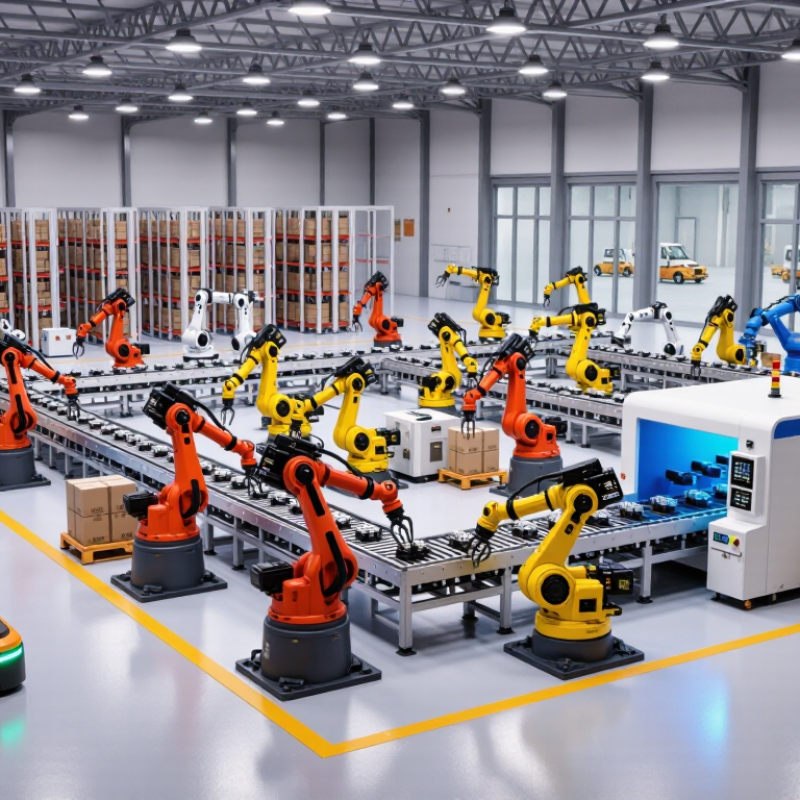
Robotic equipment suppliers now provide more than robotic arms and end-of-line machinery. They assess production layouts, cycle times, payloads, and operator movement before recommending equipment. Their packages may include robots, grippers, machine vision, conveyors, safety fencing, controllers, and production software. Integration matters. A fast robot cannot fix poor material flow.
The International Federation of Robotics reported 541,302 industrial robots installed worldwide in 2023. It also recorded 4.28 million robots operating globally. These figures show why buyers need dependable local support. Strong suppliers provide installation, programming, operator training, spare parts, remote diagnostics, and preventive maintenance. They also explain regional electrical requirements, documentation rules, and applicable machinery safety standards. Details matter.
Training remains a practical concern. The World Economic Forum’s Future of Jobs Report 2023 estimates that 44% of workers’ core skills may change by 2027. It also says 60% of workers will need training before then. Suppliers should offer hands-on instruction, not only digital manuals. Operators need to adjust a gripper, clear a fault, and restart a cell safely.
No supplier gets every deployment right. A pilot line may reveal unexpected vibration, lighting problems, or slow changeovers. Buyers should request performance records, acceptance-test criteria, and realistic service response times. The cheapest quotation can become expensive when one missing sensor stops production for two days. Reliability is built after delivery, through measurable support and honest technical communication.
| Rank | Anonymous Supplier Profile | Primary Supply Region | Main Robotic Equipment | Typical Industries Served | Payload Range | Typical Lead Time | Integration & Automation Support | Common Compliance Documentation | After-Sales Services | Best Fit for Global Buyers |
|---|---|---|---|---|---|---|---|---|---|---|
| 1 | Profile 01 Large-Scale Industrial Robotics Supplier |
Western Europe and North America | Articulated robots Welding cells Palletizing systems | Automotive, metal fabrication, logistics, general manufacturing | 6–500 kg | 12–28 weeks for configured systems | Robot programming, safety-cell design, vision integration, production-line commissioning | ISO 9001 documentation; CE or equivalent regional conformity files; electrical schematics; risk assessment | Remote diagnostics, spare-parts planning, operator training, preventive maintenance | High-volume factories requiring complete robotic production cells |
| 2 | Profile 02 Collaborative Robotics Specialist |
East Asia and Northern Europe | Cobots End-of-arm tooling Mobile workstations | Electronics, assembly, packaging, laboratory production, small-batch manufacturing | 3–30 kg | 4–14 weeks for standard configurations | Plug-and-play deployment, force-control setup, machine tending, safety assessment | CE or equivalent conformity documentation; ISO 10218 and ISO/TS 15066 implementation guidance where applicable | Online training, application support, firmware assistance, replacement-tool support | Small and medium-sized manufacturers seeking flexible automation |
| 3 | Profile 03 Warehouse Automation Provider |
North America and Western Europe | Autonomous mobile robots Pallet movers Goods-to-person systems | E-commerce, third-party logistics, retail distribution, spare-parts warehousing | 100–1,500 kg per mobile unit | 16–40 weeks depending on site scope | Warehouse-management-system integration, fleet orchestration, mapping, traffic control | Site risk assessment; battery and charger documentation; radio compliance files; cybersecurity documentation | Fleet monitoring, software updates, battery replacement, service-level support | Distribution centers needing scalable internal material movement |
| 4 | Profile 04 Packaging and Palletizing Automation Supplier |
Central Europe and East Asia | Delta robots Case packers Palletizers | Food and beverage, consumer goods, pharmaceuticals, household products | 5–250 kg | 10–24 weeks for standard lines | Conveyor integration, recipe management, barcode inspection, changeover optimization | Food-contact material declarations where applicable; CE or equivalent files; hygienic-design documentation | Line optimization, format-change support, spare parts, maintenance training | Factories requiring repeatable high-speed packaging operations |
| 5 | Profile 05 Machine-Tending and CNC Automation Supplier |
Japan, South Korea, Taiwan, and Central Europe | Six-axis robots CNC tending cells Part loading systems | Machining, aerospace components, automotive parts, medical-device manufacturing | 7–200 kg | 8–22 weeks depending on tooling and programming | Gripper design, CNC communication, part inspection, automated deburring and washing | Machine-interface documentation; electrical drawings; risk assessment; regional safety conformity files | Application reprogramming, tooling replacement, remote troubleshooting, preventive service | Precision manufacturers seeking higher machine utilization |
| 6 | Profile 06 Welding and Fabrication Robotics Supplier |
North America, Europe, and East Asia | Arc-welding robots Laser-welding cells Positioners | Structural steel, automotive components, agricultural machinery, heavy equipment | 6–350 kg | 14–32 weeks for engineered cells | Weld-program development, seam tracking, fixture design, fume extraction coordination | Welding procedure documentation; electrical conformity files; guarding and risk-assessment records | Process qualification support, torch maintenance, programming, technician training | Metalworking plants requiring consistent weld quality and throughput |
| 7 | Profile 07 Vision Inspection and Quality Automation Supplier |
Western Europe, North America, and East Asia | Inspection robots Machine vision Robotic test systems | Electronics, pharmaceuticals, medical devices, automotive, consumer products | 1–100 kg | 10–26 weeks depending on validation requirements | Camera selection, lighting design, defect classification, traceability and data integration | Validation protocols; calibration records; data-integrity procedures; regional conformity documentation | Model retraining, calibration, software support, inspection-performance reviews | Manufacturers prioritizing quality control and production traceability |
| 8 | Profile 08 Food and Pharmaceutical Robotics Supplier |
Western Europe, North America, and Singapore | Pick-and-place robots Packaging robots Cleanroom automation | Food processing, beverage, pharmaceuticals, cosmetics, medical packaging | 2–150 kg | 16–36 weeks including validation | Hygienic layout, washdown design, batch tracking, serialization and validation support | Material declarations; hygienic-design records; validation packages; CE or equivalent conformity files | Sanitation procedures, validation updates, scheduled maintenance, spare-parts management | Regulated industries requiring documented and cleanable automation |
| 9 | Profile 09 Educational and Research Robotics Supplier |
North America, Europe, and East Asia | Research arms Teaching robots Sensor platforms | Universities, technical schools, laboratories, innovation centers, pilot plants | 0.5–50 kg | 2–12 weeks for catalog equipment | Software development kits, simulation tools, programming support, custom sensor integration | Technical manuals; electrical safety documentation; software licenses; regional conformity files | Documentation, online training, firmware support, classroom and laboratory setup assistance | Organizations developing automation skills, prototypes, and research applications |
| 10 | Profile 10 Custom Robotic Systems Integrator |
Regional engineering hubs across Asia, Europe, and the Americas | Custom robot cells Turnkey lines Retrofit systems | General manufacturing, construction materials, plastics, logistics, specialized production | Defined by application; commonly 5–500 kg | 20–52 weeks for fully customized projects | Process study, layout engineering, PLC integration, digital simulation, factory acceptance testing | Complete technical file; risk assessment; electrical drawings; conformity declaration; user manuals | On-site commissioning, production ramp-up, service contracts, modernization and retrofit support | Global buyers with unusual processes or multi-stage automation requirements |