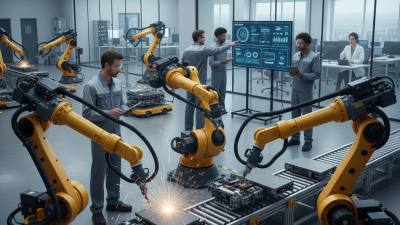
What Is the Best Manufacturing Robot from China?
Choosing the best manufacturing robot from China requires more than comparing prices and payload ratings. A factory floor tells the real story. Watch how the robot handles a steel component, repeats a weld, or pauses safely when an operator enters the cell. Cycle time matters. So do accuracy, software stability, spare-part access, and technical support.
Joseph Engelberger, widely recognized as the father of industrial robotics, once said, “I can’t define a robot, but I know one when I see one.” His practical view remains useful today. A strong manufacturing robot should solve a measurable production problem. It should reduce handling time, improve consistency, or protect workers from repetitive tasks. Chinese manufacturers now offer articulated robots, SCARA systems, collaborative robots, and specialized welding platforms. Brands such as Estun, Efort, Siasun, and Inovance deserve careful comparison, not automatic approval.
The best option depends on the application. A six-axis robot may suit automotive welding, while a compact SCARA robot may fit electronics assembly. Integration quality can matter more than the robot arm itself. Test the gripper, vision system, safety scanners, and controller together. Ask for documented cycle-time results and references from similar factories. Inspect training procedures and response times.
Nothing is perfect.
A lower-cost model may deliver excellent motion control but weaker documentation. An established supplier may offer reliability but charge more for customization. Buyers should also check certifications, warranty terms, software updates, and local service coverage. This article examines those trade-offs carefully, helping manufacturers choose a manufacturing robot based on evidence, production realities, and long-term value.
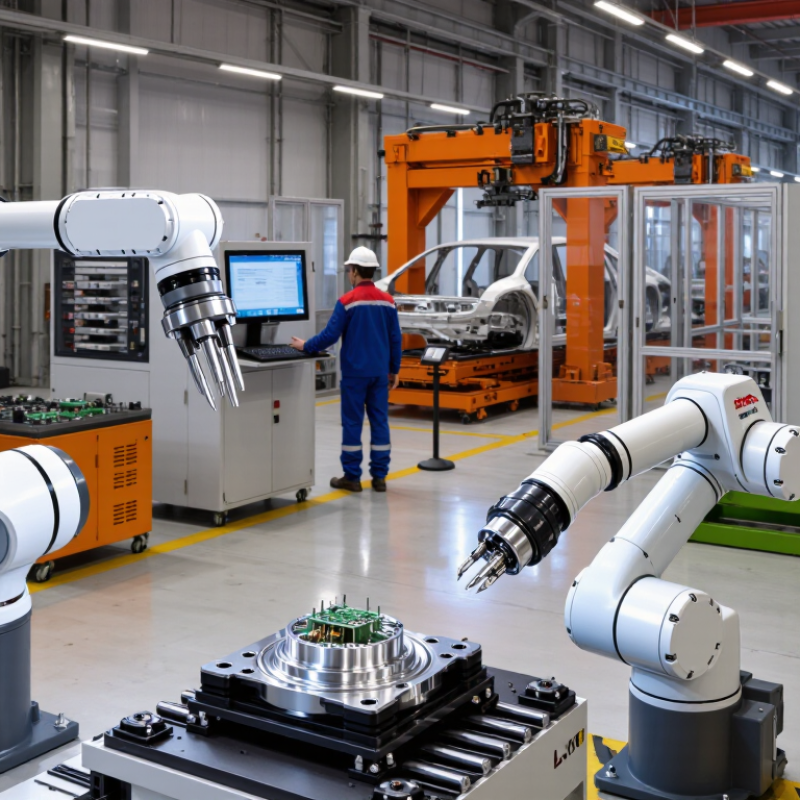
Defining the Best Manufacturing Robot from China
What Is the Best Manufacturing Robot from China?
Defining the Best Manufacturing Robot from China
The best manufacturing robot is not simply the fastest or cheapest model. It is the system that fits a factory’s real production conditions. In practical commissioning, payload, reach, cycle time, repeatability, and service response matter equally. The International Federation of Robotics reported 541,302 industrial robot installations worldwide in 2023. China accounted for 276,288 units, or about 51% of global installations. This scale shows strong manufacturing capacity, but it does not guarantee the best choice for every factory.
A reliable evaluation should include uptime, spare-part access, programming difficulty, energy use, and integration costs. The same IFR World Robotics 2024 report recorded China’s robot density at 470 units per 10,000 manufacturing workers in 2023. That figure reflects rapid automation, yet factory performance still depends on training and process design. A welding robot needs stable positioning, torch access, fume control, and guarded maintenance areas. A packaging robot needs speed, vision accuracy, and gentle product handling. A successful demonstration can still hide expensive integration delays. That weakness deserves attention.
Tips: Test the robot with your actual materials, tools, and production speed. Request cycle-time records from a comparable installation. Check compliance with ISO 10218 safety requirements. Measure recovery time after a fault, not only normal operating speed. Leave room for human maintenance access. The cheapest quotation may become costly when software support, training, and spare parts are added.
Key Types of Chinese Manufacturing Robots
What Is the Best Manufacturing Robot from China?
Key Types of Chinese Manufacturing Robots
The best manufacturing robot depends on the task, payload, speed, and factory layout. China installed 276,288 industrial robots in 2023, representing 51% of global installations, according to the International Federation of Robotics’ World Robotics 2024 report. Articulated robots suit welding, assembly, painting, and heavy material handling. Their six-axis movement resembles a human arm, but programming still requires skilled technicians. SCARA robots offer fast horizontal motion for electronics assembly and small-part insertion. Delta robots work well with lightweight products, especially food and packaging lines. Cartesian robots remain practical for simple, accurate movements across fixed rails.
Collaborative robots can share workspaces with trained operators under suitable risk controls. They often support inspection, screwdriving, and machine tending. Autonomous mobile robots move components between stations, reducing manual transport. However, they need reliable maps, charging plans, and clear traffic rules. The IFR report also recorded more than 1.7 million industrial robots operating in China during 2023. That scale shows strong adoption, yet it does not guarantee a perfect fit for every factory. A low-cost system may create hidden expenses through integration, maintenance, and downtime.
Tips: Measure cycle time before comparing robot prices. Test the robot with real parts, including scratches, weight changes, and poor alignment. Ask for local service response times and spare-parts availability. Do not ignore operator training. I would also budget for integration twice, because early estimates are often too optimistic.
Leading Applications Across Modern Manufacturing
What Is the Best Manufacturing Robot from China?
The best manufacturing robot depends on the task, not its country of origin. In modern factories, articulated robots handle welding, painting, assembly, and palletizing. Delta robots move small products rapidly across food and electronics lines. Collaborative robots support light assembly, inspection, and machine tending near trained workers. The International Federation of Robotics reported 541,302 industrial robot installations worldwide in 2023. China accounted for about 276,000 installations, representing more than half of global demand.
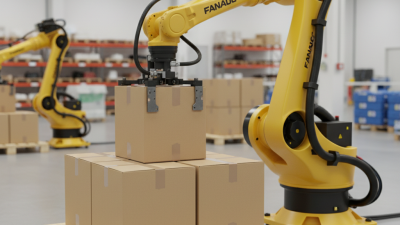
Performance becomes visible on the factory floor. A welding cell may repeat a programmed path beside a fixture, while a palletizing robot stacks cartons at consistent heights. Vision systems can detect missing parts before products reach packaging. The IFR also reported China’s robot density reached 470 robots per 10,000 manufacturing employees in 2023. That figure shows strong investment, but it does not guarantee productivity. Cycle time, payload, reach, software integration, and service response still decide value.
The International Energy Agency notes that industrial efficiency increasingly depends on smarter, connected equipment. In practice, reliable robots need stable power, accurate calibration, safe guarding, and clear maintenance routines. A lower purchase price can become expensive when spare parts arrive late. This is where buyers need evidence from factory trials, not only brochures. Some systems perform well in demonstrations but struggle with dust, vibration, or changing product sizes. That weakness deserves attention. Automation is powerful, yet imperfect.
Selecting the Right Robot for Your Production Needs
The best manufacturing robot from China is not automatically the fastest or cheapest option. It must match your production needs. Start with the task: welding, palletizing, machine tending, assembly, or inspection. Each application demands different reach, payload, speed, and positioning accuracy.
Measure the workspace carefully. A robot arm may reach the target, yet still struggle around fixtures, conveyors, or safety barriers. Check cycle time using real product weight, not a catalogue example. Confirm repeatability, controller compatibility, gripper options, and available programming support. Small details matter. For dusty or humid areas, review the robot’s protection rating and maintenance requirements.
Experience often reveals hidden costs. One production trial may expose cable wear, awkward access, or unstable gripping. Our first layout estimate was wrong because the conveyor space was too narrow. That mistake changed the cell design and improved operator access. Ask for sample testing, installation guidance, spare-part availability, and documented safety procedures. Reliable suppliers should explain limitations clearly, provide traceable specifications, and support risk assessments based on applicable local requirements.
Consider the whole production cell, not only the arm. A lower-priced robot can become expensive when integration, training, tooling, and downtime are included. Request a realistic return-on-investment calculation using your actual shifts and product mix. Leave room for human supervision and future changes. A robot that performs one perfect task may become a poor investment when your products change.