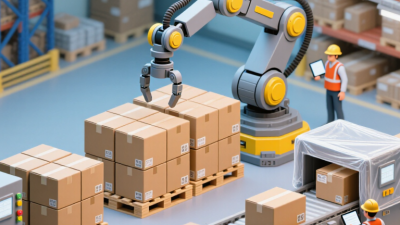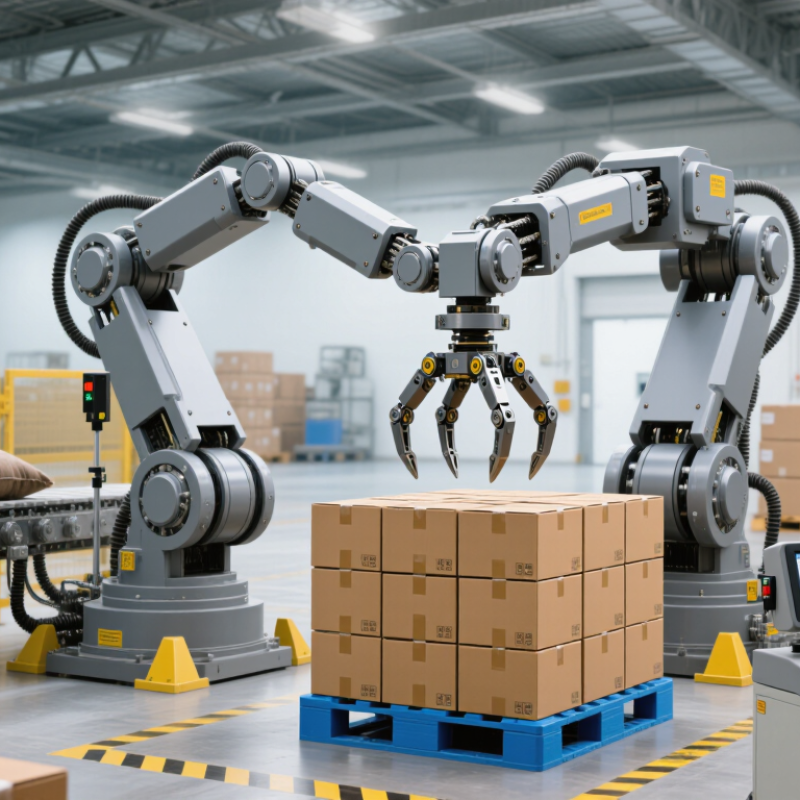
How to Choose the Best Industrial Robot Palletizer in 2026?
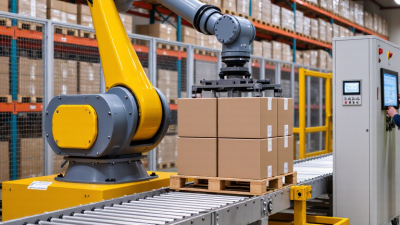
Choosing an industrial robot palletizer starts with three measurable constraints: payload, reach, and takt time. The International Federation of Robotics’ World Robotics 2024 report recorded 541,302 industrial robot installations worldwide in 2023. That figure shows strong adoption across manufacturing. It does not make every robot suitable for palletizing. Your line data matters more.
Define payload as the full moving load, not the carton weight alone. Include the gripper, vacuum cups, tooling, and dynamic forces. For example, a 12-kilogram case and a 4-kilogram tool already require 16 kilograms. Add a practical margin, then verify wrist torque. A nominal payload rating can mislead. Reach must cover the pick point, pallet corners, and the highest layer. Model the farthest approach, not the cell center. Leave clearance for slip sheets, guards, and changing pallet heights.
Takt time equals available production time divided by required output. If a conveyor delivers 40 cases per minute, takt is 1.5 seconds per case. Test the complete pattern. Include pickup, rotation, placement, release, and return. IFR’s 2023 installation figure describes adoption, not cycle performance. That distinction is easy to miss. During commissioning, record actual cycle times across full pallets. Reject brochure-only calculations. A first estimate may look excellent, yet fail when cartons shift or suction weakens. An honest allowance for jams and product variation may reduce theoretical throughput, but improves reliability.