- sale@instructrobot.com
- Dallas, TX , United States


Buying a pick and place robot is not just a matter of choosing the fastest model on a product sheet. The right system must handle your actual parts, fit your workspace, and keep pace with your production line. Robotics pioneer Joseph Engelberger famously said, “I can’t define a robot, but I know one when I see one.” For buyers, seeing a machine work is useful, but it is not enough. You also need to know what it can reliably do on your floor. Start with the part’s weight, shape, and surface. A small, slippery plastic cap may need a different gripper than a metal component. Details matter.
This guide introduces seven practical checks, from payload and reach to cycle time, end-of-arm tooling, and integration. Ask suppliers to demonstrate your parts, not just a similar sample. Watch the robot pick, move, and place each item repeatedly. Note missed picks, awkward pauses, or parts that shift in the gripper. A tidy showroom test can hide a difficult production handoff. It happens. Consider programming, maintenance access, operator training, and support after installation, too. These costs can shape the real value of a system. No single specification tells the whole story. The best choice is the one that meets your process needs today while leaving room for realistic changes tomorrow. Before comparing prices, define what success looks like on your line.
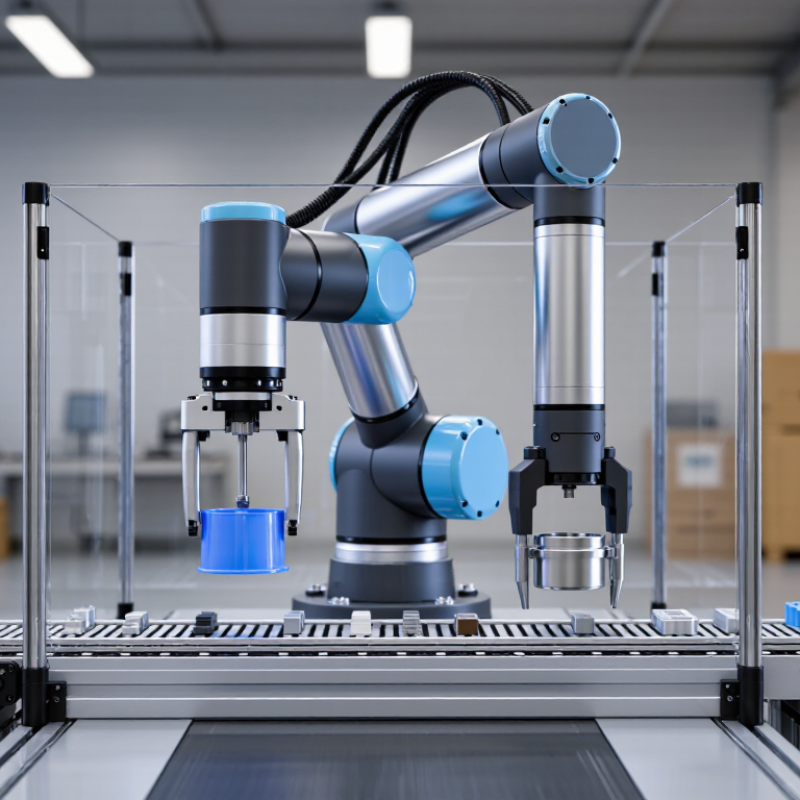
Before comparing robot models, describe the exact pick-and-place cycle. Record where parts arrive, where they go, and how they are presented. A task involving flat cartons differs from one handling small, slippery components. Note each part’s weight, dimensions, surface, and orientation. Small details matter. A glossy surface, for example, may affect a vision system’s ability to locate an edge.
Translate the cycle into measurable production requirements. Estimate average and peak picks per minute, not just the target output per shift. Include the robot’s reach, payload, placement tolerance, and available floor space. Check how parts are spaced on the infeed and whether operators or other machines share the work area. Specify expected operating hours and planned changeovers, too. These figures help reveal whether a proposed robot can meet the real workload without running continuously at its limits.
Describe exceptions as carefully as the normal cycle. Parts may arrive tilted, overlap, or vary slightly in size. Decide what should happen when a pick fails: retry, pause, or send the part to a reject area. If the process has not been measured yet, mark estimates clearly. Early numbers are often imperfect, and pretending otherwise can lead to a poor fit. A short test with actual parts can expose missed details, such as a narrow placement window or a fixture that blocks the gripper.
| Task to Define | Example Application | Workpiece Details | Production Requirement | Motion and Reach | Accuracy and Handling | What to Confirm Before Purchase |
|---|---|---|---|---|---|---|
| Packaging and case packing | Move packaged goods from a conveyor into cartons | Consistent product dimensions; known weight; packaging surface that can be gripped without damage | Specify required good parts per minute, shifts per day, and expected changeover frequency | Measure the distance between the conveyor pick point and carton placement area; include approach and clearance space | Check whether suction cups, mechanical fingers, or a custom end effector can handle the package securely | Test grip reliability on real packages, including surface variation and occasional misalignment |
| Machine tending | Load raw parts into a machine and remove finished parts | Record the heaviest part, its dimensions, center of gravity, and any sharp or hot surfaces | Robot cycle time must fit within the machine cycle, including door, fixture, and safety-system timing | Check access through the machine opening and clearance around fixtures, doors, and nearby equipment | Set repeatability requirements based on fixture and machine tolerances; verify part orientation at pickup | Confirm that the complete load includes the gripper, fingers, cabling, and workpiece—not just the workpiece |
| Small-part assembly | Place components into a fixture or onto a moving assembly line | Define component size, mass, fragile features, and acceptable contact forces | Specify the target cycle time and whether parts arrive in trays, feeders, or on a conveyor | Map each pick and place position, including any required wrist rotation or alignment movement | Determine positional tolerance from the assembly fit; tighter fits may require vision or a locating fixture | Run trials with actual components to check orientation, placement repeatability, and risk of part damage |
| Tray or bin picking | Pick randomly oriented parts from a tote and place them in a defined location | Assess part-to-part variation, reflective or dark surfaces, nesting, and the possibility of tangled parts | Estimate average picks per minute as well as recovery time when a part cannot be identified or reached | Include the full bin depth and robot approach path when checking reach and collision clearance | Vision, lighting, and gripper selection must suit the part material, shape, and presentation | Evaluate performance using representative full and partly empty bins, not only neatly arranged samples |
| Food or consumer-product handling | Transfer individual items between a production conveyor and packaging equipment | Define whether products are soft, wet, oily, deformable, or sensitive to surface contact | Document line speed, cleaning schedule, uptime expectations, and product changeovers | Check the conveyor width, transfer height, and available space for washdown or maintenance access | Choose contact materials and gripping methods compatible with the product and applicable hygiene procedures | Confirm required ingress protection, cleanability, and environmental suitability for the installation area |
| High-speed sorting | Pick and divert products moving along a conveyor | Record the range of product sizes, weights, spacing, and allowable orientation | Use peak line rate—not just average rate—to define the required pick window and system capacity | Coordinate robot motion with conveyor tracking and ensure the work envelope covers all destinations | Assess detection latency, tracking accuracy, and placement tolerance at the actual conveyor speed | Test with realistic product spacing and line-speed variation; include upstream sensing and downstream reject handling |
| Flexible production and changeovers | Handle multiple part families or switch between production recipes | List the smallest and largest parts, weight range, grip points, and required tool changes | Define acceptable changeover time, recipe storage needs, and operator skill requirements | Check whether every product variant fits within the same safe working envelope | Determine whether one adjustable gripper is practical or separate end effectors are needed | Include setup, calibration, validation, and spare-tool time in the changeover plan |
Planning note: These examples are starting points, not guaranteed robot performance figures. Confirm payload, reach, cycle time, repeatability, environmental rating, and safety requirements against the actual part, end effector, layout, and production process.