Choosing a FANUC robot is not simply a matter of selecting the newest model. Global buyers must match the robot with real production conditions, operator skills, floor space, and long-term service support. A six-axis arm may look powerful, yet its reach can be unsuitable for a narrow workstation. A smaller collaborative model may fit better, but it might not handle heavy tooling or demanding cycle times.
Mike Cicco, former president and CEO of FANUC America, has emphasized a practical principle: “Automation must deliver measurable value, not simply impressive technology.” That perspective guides this comparison. The top ten FANUC robot models are examined through payload, reach, repeatability, speed, controller compatibility, application range, and maintenance needs. Welding cells, palletizing lines, machine tending stations, and clean production areas require different strengths. There is no universal winner.
Some choices are obvious. Others are not.
This guide draws on common industrial selection practices and the performance priorities faced by integrators and plant managers. It also considers less visible factors, including cable routing, teach pendant usability, spare-part access, software options, and regional technical support. These details can influence downtime more than a specification sheet suggests. Buyers should still verify current model data with FANUC or an authorized distributor, because configurations and availability may change by market. The ranking is useful, but imperfect. A robot that excels in a German automotive plant may be unnecessarily complex for a smaller packaging operation in Southeast Asia. The best FANUC robot is the one that fits the process, not the one with the most impressive headline specification.
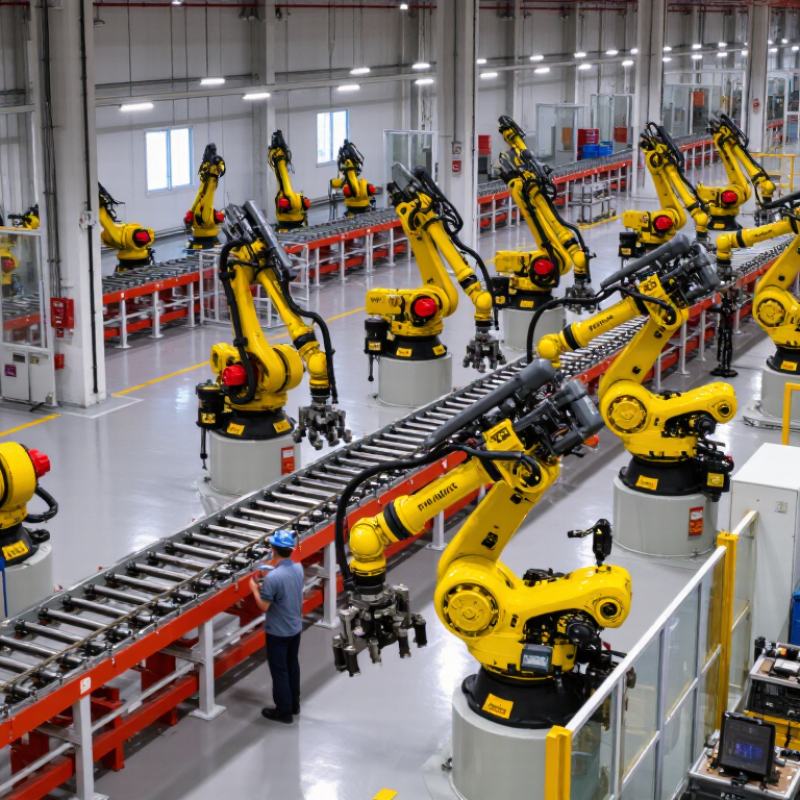
What makes these industrial robots popular among global buyers is practical consistency. In commissioning work, technicians often value predictable motion more than impressive marketing claims. The leading ten models usually cover different payloads, reaches, speeds, and installation styles. Buyers can match a compact arm with small assembly cells or choose a heavier model for palletizing. Their programming interfaces are familiar to many integrators. That reduces training time and speeds up production changes. Spare-part availability also matters, especially for factories operating across several countries.
Reliability is another strong reason. A well-maintained robot can repeat the same path for years, even in dusty or high-cycle environments. Enclosed joints, suitable protection ratings, and stable controllers support demanding applications. Global buyers also appreciate established service networks and extensive technician knowledge. However, popularity is not proof of fit. I have seen companies choose a powerful arm when a smaller unit would have used less energy and space. That decision looked impressive, but it increased installation costs.
Tips: Confirm payload at full extension, not only the catalog maximum. Check cycle time with the real tool attached. Review local service coverage, training options, safety integration, and replacement-part lead times. Test sample movements before ordering. A short trial can expose cable interference, awkward access, or poor operator visibility. Don’t ignore maintenance records. They reveal more than polished brochures.
| Rank | Robot Model | Robot Type | Maximum Payload | Reach | Axes | Typical Applications | Why Global Buyers Consider It |
|---|---|---|---|---|---|---|---|
| 1 | LR Mate 200iD | Small articulated | 7 kg | 717 mm | 6 | Assembly, inspection, picking, machine tending | Compact footprint, broad application range, and suitability for space-constrained production cells. |
| 2 | CRX-10iA | Collaborative articulated | 10 kg | 1,249 mm | 6 | Light assembly, packaging, material handling, machine tending | Designed for flexible deployment, straightforward programming, and collaborative work-cell concepts. |
| 3 | LR-10iA/10 | Small articulated | 10 kg | 1,101 mm | 6 | Part transfer, packaging, assembly, machine tending | Balances payload, reach, and installation efficiency for general-purpose industrial automation. |
| 4 | M-10iD/12 | Medium articulated | 12 kg | 1,441 mm | 6 | Material handling, assembly, dispensing, machine tending | Provides longer reach than compact units while retaining a relatively small installation envelope. |
| 5 | ARC Mate 100iD | Arc-welding articulated | 12 kg | 1,441 mm | 6 | Arc welding, seam tracking, welding fixture service | Purpose-oriented geometry and cable-management options support repeatable welding operations. |
| 6 | M-20iD/25 | Medium articulated | 25 kg | 1,831 mm | 6 | Palletizing, packaging, machine loading, material handling | A practical choice when production requires increased payload and extended working reach. |
| 7 | M-710iC/50 | Heavy-duty articulated | 50 kg | 2,050 mm | 6 | Heavy material handling, palletizing, machine loading | Supports heavier tooling and workpieces without moving to the largest robot classes. |
| 8 | R-2000iD/210FH | High-payload articulated | 210 kg | 2,606 mm | 6 | Automotive handling, body-shop processes, palletizing, heavy part transfer | Combines high payload capacity with a reach range suited to large industrial work areas. |
| 9 | M-900iB/400L | Very-high-payload articulated | 400 kg | 3,704 mm | 6 | Large-part handling, casting, forging, palletizing, machine loading | Built for demanding loads, long reach, and large-scale manufacturing environments. |
| 10 | DR-3iB/6 | Delta parallel | 6 kg | 1,200 mm | 4 | High-speed picking, sorting, food packaging, small-part handling | Parallel-arm architecture is well suited to fast repetitive pick-and-place operations. |
Note: Payload and reach figures are maximum published specifications for the listed configurations. Actual performance depends on tooling, wrist load, motion profile, installation conditions, and applicable regional safety requirements.
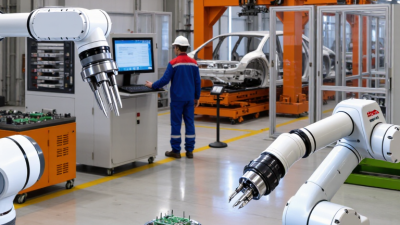
Top 10 Industrial Robot Models for Global Buyers
Classifying industrial robot models by application and payload is more useful than comparing model names alone. Lightweight robots, often rated below 12 kilograms, suit electronic assembly, inspection, and small-part handling. Their compact arms fit beside conveyors and reduce floor-space pressure. Medium-payload models, usually between 20 and 50 kilograms, handle machine tending, packaging, and arc welding. They need stronger fixtures and more careful cable routing. Heavy-payload robots can exceed 100 kilograms. These systems are designed for palletizing, automotive handling, casting, and large-part transfer.
Payload is not the only selection factor. The gripper, cables, sensors, and product weight must be counted together. A 30-kilogram workpiece may exceed a robot’s practical capacity after tooling is added. Wrist inertia also affects accuracy and service life. Reach matters near deep fixtures, while repeatability matters during insertion or welding. In dusty or wet areas, the protection rating should match the cleaning method. It is an easy detail to overlook.
Application trials reveal problems that brochures cannot show. I have seen a suitable payload fail because the gripper shifted the center of gravity too far forward. Cycle time also changes when the robot carries an uneven load. For global buyers, verify electrical standards, spare-part access, software support, and local technician training. Catalog ranges can differ between regions. Test the complete cell before approving the final model.
When buyers compare ten industrial robot models, application details matter more than popularity. In plant audits, compact six-axis arms often handle small-part assembly beside conveyors. High-speed delta robots suit sorting, where cycle time can fall below one second. Medium-payload articulated arms support welding, machine tending, and palletizing. Heavy-payload arms move engine blocks, castings, and loaded pallets. Long-reach versions serve large fixtures and deep work envelopes. Collaborative arms fit lower-volume workstations, although their speed may disappoint some factories.
Painting models require sealed construction and controlled fluid delivery. Cleanroom models reduce particle risks during electronics production. Scara robots provide fast, repeatable horizontal assembly. Food-grade units need smooth surfaces and careful washdown planning. Vision-guided models can locate mixed components, but lighting errors still cause missed picks.
That detail is easy to underestimate.
A reliable selection should check payload at full extension, not only rated capacity. Engineers should also test cable routing, controller compatibility, guarding, and maintenance access. Floor space matters when the arm swings near operators or storage racks.
A digital simulation helps, but real samples reveal vibration, glare, and awkward handoffs.
I would not trust a perfect datasheet alone.
A pilot cell with actual parts may expose a model that looked ideal during procurement. Availability of training, spare parts, and local service also affects long-term operating cost.
When comparing ten industrial robot models, start with the workpiece, not the catalog ranking. Payload includes the gripper, cables, and product weight. A small error here can reduce accuracy and shorten service life. Reach matters too. Measure the farthest pick point, then leave clearance around fixtures and safety fencing. Six-axis robots suit flexible assembly, while four-axis designs often perform better in fast palletizing.
Key specifications deserve equal attention. Compare repeatability, maximum speed, axis range, mounting direction, and protection rating. A stated repeatability of ±0.02 mm sounds impressive, but real results depend on temperature, tooling, calibration, and floor vibration. Check controller memory, communication options, programming methods, and cycle-time data under similar loads. Service access also matters. A robot that performs well but requires long maintenance downtime may cost more over several years.
Tips: Build a simple comparison sheet. Record payload, reach, repeatability, cycle time, IP rating, power demand, and controller compatibility. Ask for application-based test data, not only brochure values. Visit the planned workspace with a measuring tape. It sounds basic. It prevents expensive assumptions. Also review operator training, spare-part availability, and local technical support. I would not choose from specifications alone; a short production trial can reveal cable interference, awkward wrist positions, or slower-than-expected recovery after stoppages.
Comparison of representative six-axis industrial robot configurations by nominal payload. Model labels are anonymized; specifications are based on published nominal values.
| Model | Payload (kg) | Reach (mm) | Repeatability (mm) | Axes |
|---|---|---|---|---|
| Model 01 | 7 | 717 | ±0.02 | 6 |
| Model 02 | 10 | 1100 | ±0.02 | 6 |
| Model 03 | 10 | 1249 | ±0.04 | 6 |
| Model 04 | 12 | 1441 | ±0.02 | 6 |
| Model 05 | 25 | 1831 | ±0.03 | 6 |
| Model 06 | 50 | 2050 | ±0.03 | 6 |
| Model 07 | 100 | 2606 | ±0.04 | 6 |
| Model 08 | 165 | 2655 | ±0.03 | 6 |
| Model 09 | 700 | 2832 | ±0.07 | 6 |
| Model 10 | 2300 | 3734 | ±0.10 | 6 |
For global buyers, payload should be evaluated together with reach, repeatability, installation footprint, cycle-time requirements, and the actual wrist or tooling load. Higher payload models generally offer greater handling capacity but may require more floor space and stronger foundations.
Choosing the right industrial robot requires more than comparing ten model names. The International Federation of Robotics recorded 541,302 installations worldwide in 2023, following 553,052 in 2022 (World Robotics 2024). That demand shows a mature market, but selection mistakes remain costly. Start with the real payload, reach, cycle time, and required repeatability. Do not size from averages. Include grippers, cables, sensors, and product weight.
Reach affects floor layout and operator access. A six-axis robot suits complex wrist angles, while a simpler arm may reduce maintenance. Environmental ratings matter near coolant, dust, heat, or washdown areas. Check the complete cell, not only the arm. IFR also reported 4.28 million industrial robots operating globally in 2023, making lifecycle support increasingly important (World Robotics 2024). This matters.
Integration deserves equal attention. Confirm communication protocols, safety interfaces, vision compatibility, and available training. A robot may meet every specification yet fail during commissioning. In practice, regional service response can matter more than a small payload advantage. Review spare-parts access and technician coverage before signing. A neat spreadsheet can still mislead. Recheck cycle-time claims using your actual parts, tooling, and production temperature. The best choice is rarely the most powerful option.