7 Best FANUC Robots for Industrial Automation
Choosing a FANUC robot is not simply a matter of picking the biggest arm. The right choice depends on payload, reach, cycle time, accuracy, and the space available on the factory floor. A compact assembly cell may need a different machine from a palletizing line with heavy loads. And a robot that looks capable on paper can still be a poor fit.
Robotics pioneer Joseph Engelberger is often quoted as saying, “I can’t define a robot, but I know one when I see one.” The line is memorable, but seeing a machine move is not enough. Buyers need to understand what it can do, how it integrates with existing equipment, and what support its operation will require. This guide compares seven FANUC robot options for industrial automation, from precise handling and welding to demanding material movement. It highlights practical selection factors, including reach, payload, installation needs, and application fit. Those details matter.
The comparison cannot replace an engineering review. Real production conditions may expose limits that a product sheet does not show. That is worth considering. Use the lineup as a starting point, then check each candidate against the actual task, tooling, safety requirements, and available floor space. A well-matched fanuc robot can help make a process more consistent; a mismatched one can add cost and complexity.
How FANUC Robots Support Industrial Automation
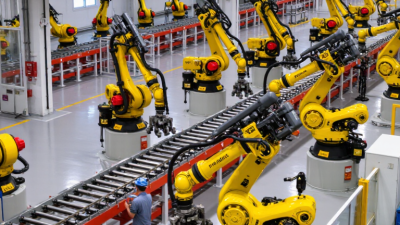
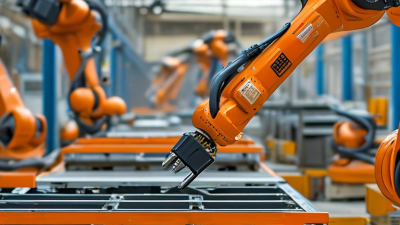
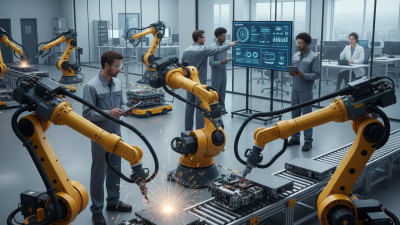
Industrial automation works best when robots handle repeatable, physically demanding tasks while people manage exceptions. Articulated arms can weld a vehicle frame, tend a machine, or place cartons onto a pallet. Their reach, payload, and tooling must match the task. A gripper designed for rigid parts may struggle with soft packaging. Small details matter.
The International Federation of Robotics reported 4,281,585 industrial robots operating in factories worldwide in 2023, a 10% increase from 2022. Its World Robotics 2024 report also recorded 541,302 new installations that year. These figures show broad adoption, but installation counts alone do not prove productivity gains. Each cell still needs sound layout, stable part presentation, and careful commissioning. A misaligned fixture can turn a fast cycle into repeated stops.
In practice, robot systems support automation through consistent motion, programmable paths, and integration with sensors and production equipment. Operators can adjust programs when product sizes change, though frequent changeovers still require planning and validation. Safety barriers, interlocks, and clear maintenance access are essential design details, not finishing touches. The awkward part is often integration: older equipment may not exchange data cleanly, and recovery procedures can be overlooked. Automation helps most when the whole process is engineered around the robot, not just the arm.
Key Criteria for Evaluating FANUC Robot Models
Choosing an industrial robot starts with the part, not the catalog. Record the heaviest load, including grippers, cables, and any workpiece imbalance. Then check reach across the full motion path, not just the farthest point. A long arm may reach the fixture but lose useful capacity near its limit. Fit matters.
Compare repeatability and cycle time against the actual task. A loading cell may need steady, predictable placement more than extreme speed. Ask whether the robot can maintain accuracy through the planned shifts and operating conditions. Dust, heat, washdown, and vibration can change which configuration makes sense. Small details bite.
Also review controller compatibility, programming requirements, safety functions, and access for routine service. A technician should be able to inspect cables and replace common wear parts without dismantling nearby equipment. Check the complete cell layout, including fences, doors, fixtures, and operator routes. A technically capable arm can still create awkward maintenance or reach problems when installed poorly.
Finally, compare total ownership costs, not purchase price alone. Include tooling, integration, training, spare parts, and expected downtime. Ask suppliers for task-specific cycle estimates and test data, then verify them with representative parts. Estimates are not guarantees; real production often exposes a few inconvenient surprises.
7 Best Industrial Robots for Automation — Key Criteria for Evaluating Robot Models
| Robot Profile |
Typical Payload |
Typical Reach |
Common Axes |
Typical Repeatability |
Best-Fit Applications |
Key Evaluation Criteria |
| Compact precision robot |
3–10 kg |
0.5–1.0 m |
6 |
±0.02–0.05 mm |
Small-part assembly, inspection, machine tending, and bench-top handling |
Check work-envelope fit, tool clearance, cycle time, and required positioning accuracy. |
| Lightweight handling robot |
7–20 kg |
0.9–1.5 m |
6 |
±0.02–0.06 mm |
Packaging, pick-and-place, light machine tending, and material transfer |
Include the gripper and workpiece in payload calculations; assess wrist load and cable routing. |
| Medium-duty versatile robot |
20–50 kg |
1.4–2.0 m |
6 |
±0.03–0.08 mm |
Machine loading, medium-part assembly, dispensing, and general material handling |
Compare payload at full extension, reach at the required orientation, and expected cycle time. |
| Long-reach process robot |
5–20 kg |
1.8–2.8 m |
6 |
±0.02–0.08 mm |
Arc welding, sealing, painting, and processing across large work areas |
Evaluate reach around fixtures, tool-path access, dress-pack requirements, and process integration. |
| Heavy-payload handling robot |
100–300 kg |
2.0–3.2 m |
6 |
±0.1–0.3 mm |
Heavy machine tending, automotive components, and large-part transfer |
Verify payload capacity at the required reach, mounting conditions, inertia limits, and safeguarding needs. |
| Extra-heavy handling robot |
300–1,000 kg |
2.5–4.7 m |
4–6 |
±0.1–0.5 mm |
Large castings, structural components, heavy assembly, and bulk material handling |
Assess foundation loads, floor space, part inertia, motion limits, and the cost of safety infrastructure. |
| Palletizing robot |
80–700 kg |
2.0–3.2 m |
4–6 |
±0.1–0.3 mm |
Case and bag palletizing, depalletizing, and end-of-line material flow |
Compare cycle rate, pallet pattern flexibility, usable vertical stroke, gripper weight, and conveyor layout. |
Specifications are indicative ranges commonly found across industrial robot configurations, not guarantees for a particular model. Actual payload, reach, repeatability, cycle time, and axis count vary by design and configuration; confirm them against the robot’s technical documentation and the complete end-of-arm tooling load.
Seven FANUC Robots and Their Industrial Applications
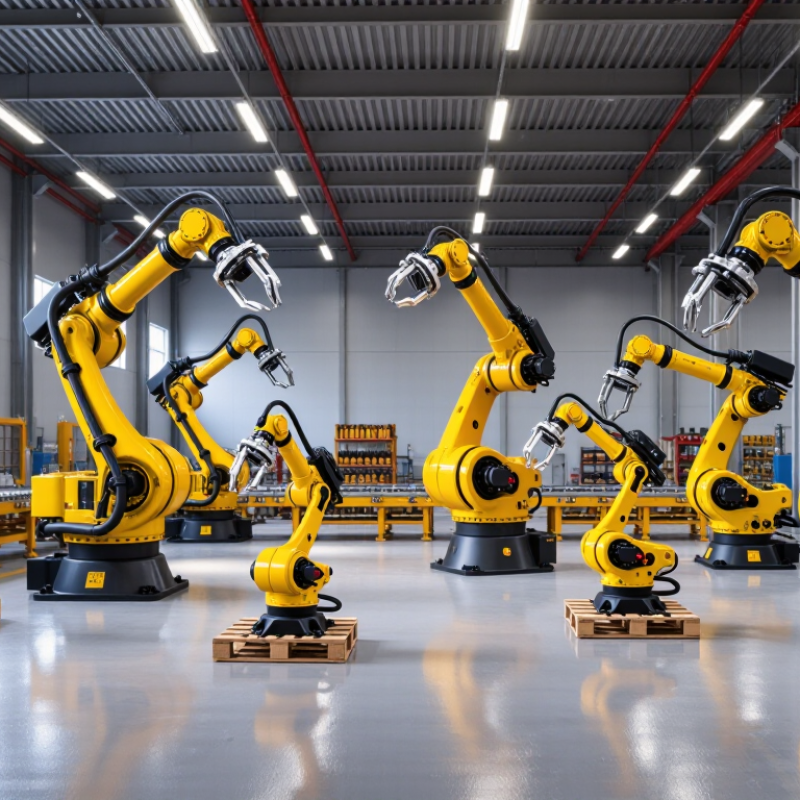
A compact six-axis robot suits machine tending, electronics assembly, and small-part handling. Its short reach fits crowded cells. Small parts, fast. A high-speed delta robot can pick lightweight food packs or components from a moving belt. A collaborative robot works well for low-volume assembly, where people need to share a workstation. A medium-payload robot handles welding or machine loading, with enough reach to serve adjacent fixtures. Each choice depends on more than payload: cycle time, tool weight, and access to the workpiece all matter.
A long-reach robot can serve multiple machines or reach deep into a vehicle body during welding. A heavy-payload robot moves large castings or bulky assemblies, but needs a carefully planned cell. A palletizing robot stacks cartons at the end of a production line; consistent box placement makes its value easy to see. The International Federation of Robotics reported 4.28 million industrial robots operating in factories worldwide in 2023 (World Robotics 2024). That scale is impressive, but it does not make every installation successful. Payload charts can mislead. I would test the real tool, part, and motion path before choosing a robot; that step is often rushed.
7 Industrial Robot Applications and Typical Payload Ranges
Representative payload ranges illustrate how robot capacity often varies by application. Actual requirements depend on the part, tooling, reach, and process.
Payload is shown in kilograms. These broad, indicative ranges are not universal limits or application specifications.
How to Match a FANUC Robot to a Production Task
Matching a robot to a production task starts with the part, not the catalog. Record the workpiece’s weight, dimensions, grip points, and required placement accuracy. Then measure the full path, including clearance around fixtures and conveyors. A compact SCARA robot may suit fast, repetitive pick-and-place work, while a six-axis arm can handle angled approaches and more complex paths. Check payload carefully: the gripper and cables count toward the load. They are easy to overlook.
Cycle time matters, but a fast arm cannot fix a slow or poorly arranged workstation. Compare the complete task cycle, including gripping, settling, and handoff. Review the operating environment, too. Dust, heat, washdown, and limited floor space can change which configuration is practical. One detail teams sometimes underestimate is access for maintenance. A robot that fits on paper may leave technicians little room to reach a cable or tool. I would still validate the layout with a real part; drawings can hide awkward movements.
Tips: Bring sample parts and the proposed end-of-arm tool to a simulation or cell trial. Confirm reach at the actual mounting height, test the heaviest load, and watch for cable snags. Keep a little capacity in reserve. Too much reserve can also mean paying for size and reach the task never uses.
Safety, Integration, and Maintenance Considerations
Selecting an industrial robot is only part of a safe automation project. The International Federation of Robotics’ World Robotics 2024 report counted 4.28 million industrial robots operating worldwide in 2023. That installed base makes guarding, training, and maintenance planning practical priorities, not optional extras. Before installation, map the robot’s full reach, including its tool and workpiece. Check pinch points near fixtures and walkways. Small details matter. Risk assessments should also consider setup, cleaning, recovery, and other tasks outside normal production. ISO 10218 provides relevant industrial robot safety requirements, but site-specific hazards still need direct review.
Integration deserves equal attention. Confirm controller compatibility, communication protocols, payload at full extension, and the space needed for cable routing. A robot may meet its cycle-time target on paper yet struggle when a gripper, sensor, and moving cable are added. Maintenance teams should have access to fault logs, spare-part records, and clear isolation procedures. Keep routine checks simple: inspect cables for abrasion, clean sensors, and note unusual vibration. Predictive monitoring can help, but it cannot replace skilled inspection. This is the awkward part: schedules often assume perfect uptime. Real production is messier, so leave room for troubleshooting and document changes after commissioning.